

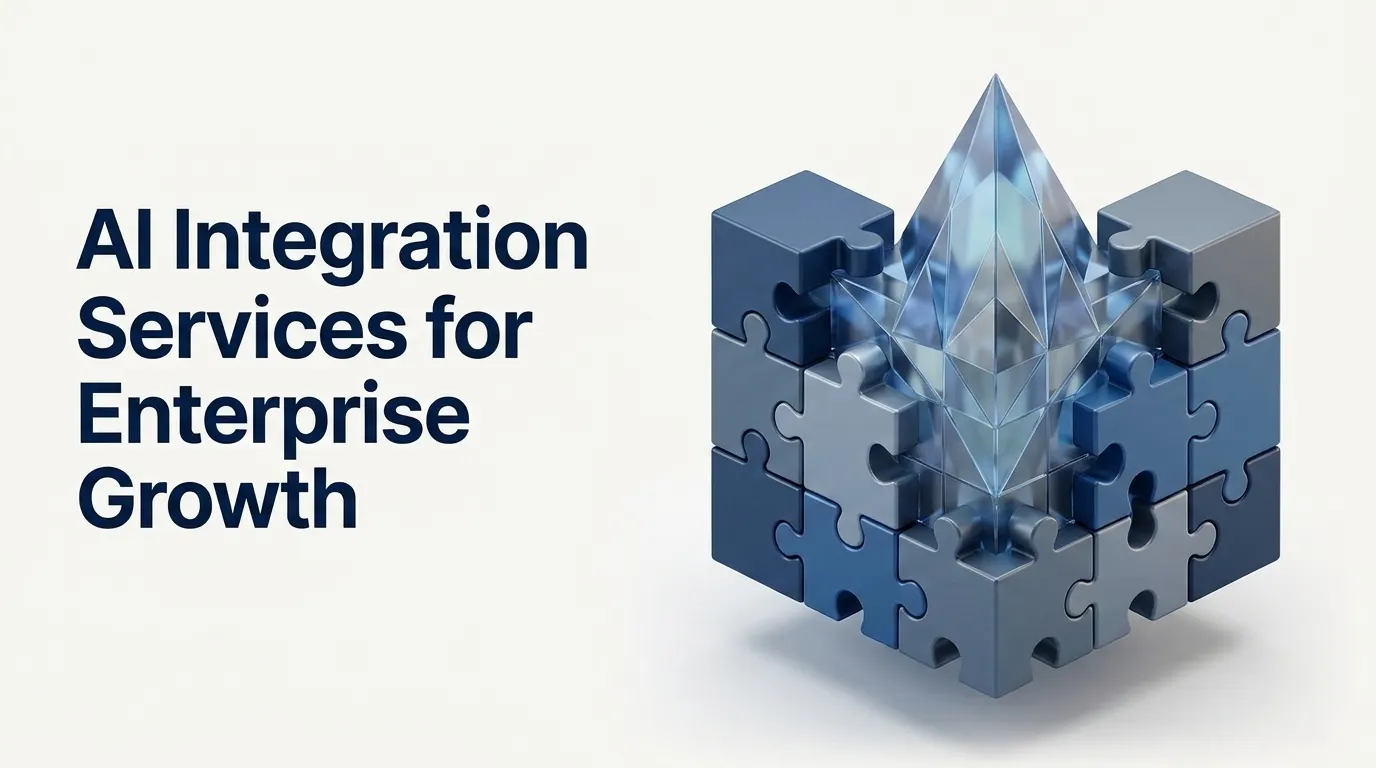
AI Integration Services: Connecting Intelligence Across Enterprise Systems
Introduction
Artificial intelligence is transforming how organizations operate, communicate, and make decisions. However, deploying AI tools alone is not enough to achieve meaningful business outcomes. Companies must connect AI capabilities with their existing systems to unlock real value.
Modern enterprises use multiple platforms for customer management, operations, finance, and analytics. Without proper integration, these systems often work in isolation and create data silos. This limits the effectiveness of AI initiatives and reduces overall efficiency.
This is where AI integration services become essential. They help organizations connect intelligent technologies with existing infrastructure, enabling seamless workflows, better insights, and faster decision-making. Businesses across the USA and UAE are increasingly investing in enterprise AI solutions to remain competitive and future-ready.
Organizations seeking expert support often partner with MatchBest Software to build scalable AI ecosystems that align with long-term business goals.
Why This Matters
AI delivers maximum value when it operates across the entire organization rather than within isolated applications.
- Connects data from multiple business systems
- Improves operational efficiency and productivity
- Enhances decision-making through real-time insights
- Reduces manual work and repetitive tasks
- Creates a unified customer and employee experience
Core Concepts of AI Integration
Understanding AI Integration Services
AI integration services focus on connecting AI models, tools, and automation capabilities with existing enterprise platforms. These integrations ensure intelligent systems can access and process business data effectively.
Key Points
- Connect AI with ERP, CRM, and cloud platforms
- Enable real-time data exchange
- Improve workflow automation
- Reduce operational bottlenecks
- Support enterprise-wide intelligence
Example / Use Case
A manufacturing company integrates AI-powered predictive maintenance with its ERP platform. The system identifies equipment issues early and automatically schedules maintenance, reducing downtime and operational costs.
Building Enterprise AI Solutions
Enterprise AI solutions go beyond simple automation. They create intelligent ecosystems where different systems communicate and collaborate seamlessly to support strategic business objectives.
Key Points
- Centralized AI-powered decision-making
- Scalable architecture for growth
- Cross-department collaboration
- Secure data management
- Improved business agility
Example / Use Case
A retail organization combines customer data, inventory information, and sales forecasting models. This integrated environment helps optimize stock levels and improve customer satisfaction across multiple channels.
The Role of AI Consulting Services
Successful AI implementation begins with a clear strategy. AI consulting services help businesses identify opportunities, assess readiness, and develop a roadmap for long-term success.
Key Points
- Evaluate business requirements
- Identify high-impact AI use cases
- Select suitable technologies
- Create implementation strategies
- Ensure governance and compliance
Example / Use Case
A financial services provider works with AI consultants to determine where automation can improve customer onboarding. The resulting strategy reduces processing time while maintaining compliance standards.
AI Implementation Services for Scalable Growth
AI implementation services focus on deploying and integrating solutions within existing business environments. These services ensure smooth adoption while minimizing disruption.
Key Points
- System integration and deployment
- Model configuration and testing
- User training and adoption support
- Performance monitoring
- Continuous optimization
Example / Use Case
A healthcare organization implements AI-powered document processing. The integrated solution extracts patient information automatically, reducing administrative workload and improving accuracy.
Integrating AI Across Business Functions
Organizations gain the most value when AI supports multiple departments simultaneously. Integration creates a connected ecosystem where intelligence flows throughout the enterprise.
Key Points
- Sales and marketing optimization
- Customer service automation
- Supply chain intelligence
- Financial forecasting
- Human resource automation
Example / Use Case
A multinational enterprise integrates AI across customer support, sales, and operations. Teams gain access to shared insights, resulting in better collaboration and faster business decisions.
Learn more about how intelligent enterprise ecosystems are evolving through the Byteplus & MatchBest Partnership, which focuses on accelerating AI-driven innovation and digital transformation.
Key Benefits
- Faster decision-making through unified data access
- Increased productivity across departments
- Better customer experiences through personalization
- Reduced operational costs and inefficiencies
- Improved scalability for future growth
- Enhanced visibility into business performance
- Stronger competitive advantage in dynamic markets
Common Mistakes
- Implementing AI without a clear business strategy
- Ignoring data quality and governance requirements
- Choosing tools that do not integrate well
- Failing to train employees on new systems
- Overlooking security and compliance considerations
- Attempting large-scale deployments without pilot testing
- Neglecting ongoing monitoring and optimization
Future Trends
The future of AI integration will focus on greater automation, real-time intelligence, and deeper connectivity between enterprise systems. Organizations will increasingly adopt AI-driven workflows that require minimal human intervention while maintaining transparency and control.
Generative AI, intelligent agents, and predictive analytics will become standard components of enterprise technology stacks. Businesses that invest in scalable integration strategies today will be better positioned to capitalize on emerging opportunities tomorrow.
As AI adoption grows, companies will also prioritize governance frameworks, ethical AI practices, and secure data management. These factors will become critical components of successful enterprise AI solutions.
Conclusion
AI is no longer a standalone technology initiative. It has become a strategic business capability that must connect seamlessly with existing systems and processes. Organizations that invest in effective AI integration services can unlock greater efficiency, smarter decision-making, and sustainable growth.
Whether you are exploring AI consulting services, planning enterprise AI solutions, or implementing intelligent automation, a structured integration approach is essential for success. Start building a connected and intelligent enterprise that is ready for the future.
FAQ Section
1. What are AI integration services?
AI integration services connect artificial intelligence technologies with existing business systems. They enable seamless data flow, automation, and intelligent decision-making across the organization.
2. Why are enterprise AI solutions important?
Enterprise AI solutions help organizations improve efficiency, reduce costs, and gain valuable insights. They create a unified environment where AI supports multiple business functions.
3. How do AI consulting services help businesses?
AI consulting services identify opportunities, evaluate readiness, and create implementation strategies. They help organizations maximize return on AI investments while reducing risks.
4. What is included in AI implementation services?
AI implementation services typically include deployment, system integration, testing, user training, and ongoing optimization. These activities ensure successful adoption and long-term performance.
5. Which industries benefit from AI integration?
Industries such as healthcare, finance, manufacturing, retail, logistics, and technology benefit significantly. AI integration improves operational efficiency and enhances customer experiences across sectors.
Latest Article
👉 Best Practices for Setting Up an AI Center of Excellence
Previous Blogs
Author
Written by: Andrew