

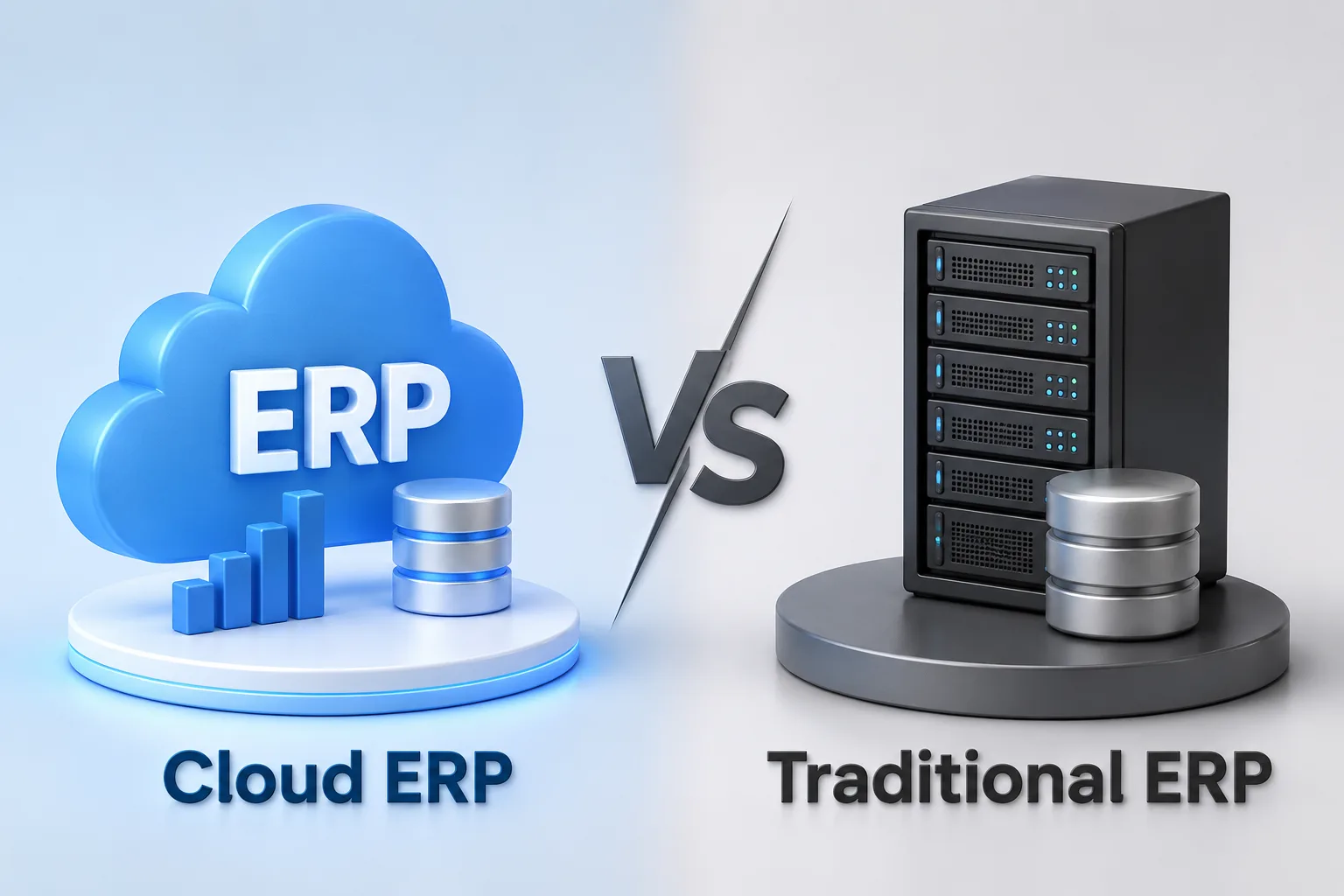
Cloud ERP vs Traditional ERP
Modern businesses need flexible systems that support growth, automation, and faster decisions. Many companies now compare cloud ERP platforms with traditional ERP systems before starting digital transformation projects. The right ERP strategy can improve operations, reduce costs, and strengthen long-term scalability.
Organizations across the USA, UAE, and global markets are also exploring how AI improves ERP performance. Businesses want systems that connect finance, operations, customer management, and analytics through a single platform. This demand has increased interest in advanced ERP solutions that combine automation with cloud infrastructure.
Traditional ERP systems still serve many enterprises successfully. However, cloud ERP platforms now provide faster deployment, easier maintenance, and improved remote accessibility. Companies adopting ERP with AI features are gaining operational visibility and better decision-making support.
Businesses also evaluate hosting reliability during ERP transformation planning. Factors like security, scalability, and integration capabilities influence the final technology decision. This is why many enterprises compare hosting in Google Cloud Platform, AWS environments, and other modern infrastructure providers.
Introduction
ERP systems help organizations manage core operations through one centralized platform. These systems connect departments including finance, procurement, human resources, inventory, and customer management. Companies use ERP solutions to improve productivity and reduce operational delays.
Traditional ERP platforms usually operate through on-premise infrastructure and internal servers. Businesses maintain hardware, upgrades, security, and software maintenance independently. This model provides control but often increases infrastructure and operational costs.
Cloud ERP platforms work differently because vendors manage infrastructure and updates remotely. Businesses access these systems through secure internet environments without maintaining physical servers internally. This approach supports remote work, scalability, and faster deployment cycles.
Today, many organizations combine ERP with AI technologies to improve forecasting, reporting, and workflow automation. AI-driven ERP systems help companies identify trends, optimize resources, and reduce repetitive manual processes efficiently.
Why This Matters
ERP selection directly affects business scalability, operational efficiency, and customer experience. Choosing the wrong platform can increase costs and create long-term technology limitations.
- Cloud ERP improves accessibility for distributed teams and remote operations
- Traditional ERP provides deeper infrastructure control for specific industries
- ERP transformation supports business automation and workflow standardization
- ERP with AI improves reporting accuracy and predictive analytics
- Modern ERP solutions integrate better with cloud hosting platforms
Understanding Traditional ERP Systems
Traditional ERP systems operate through local servers managed within company facilities. Organizations purchase licenses, install software internally, and maintain their infrastructure independently. Large enterprises previously preferred this approach because it offered complete control over systems and data.
Key Points
- Requires dedicated in-house hardware infrastructure
- Higher upfront investment and maintenance costs
- Internal IT teams manage updates and security
- Limited flexibility for remote workforce environments
- Longer deployment and upgrade cycles
Example / Use Case
A manufacturing company with strict compliance requirements may prefer traditional ERP deployment. Internal infrastructure allows greater operational control while supporting highly customized workflows and security standards.
Understanding Cloud ERP Systems
Cloud ERP platforms operate through remote servers maintained by technology providers. Businesses access the platform online without managing physical infrastructure internally. This deployment model supports scalability, flexibility, and lower operational overhead.
Many companies now prefer cloud ERP because implementation becomes faster and more affordable. Organizations also benefit from automatic updates, better remote access, and easier integration with business applications.
Key Points
- Lower infrastructure and maintenance expenses
- Faster implementation and scalability
- Better support for hybrid and remote teams
- Easier integration with AI and analytics tools
- Improved disaster recovery and backup capabilities
Example / Use Case
A growing retail company expanding internationally may choose cloud ERP deployment. The platform supports multiple locations while reducing hardware investments and maintenance complexity significantly.
Cloud ERP vs Traditional ERP: Major Differences
Choosing between cloud ERP and traditional ERP depends on business priorities, budgets, and long-term technology goals. Companies should evaluate operational flexibility, infrastructure costs, and scalability carefully before making decisions.
Deployment and Infrastructure
Traditional ERP systems require local servers and dedicated infrastructure investments. Cloud ERP platforms operate through external hosting environments managed by service providers.
Businesses comparing the best cloud hosting companies often evaluate performance, uptime, and scalability for ERP deployment. Reliable infrastructure improves operational continuity and application performance significantly.
Key Points
- Traditional ERP depends on local hardware management
- Cloud ERP reduces physical infrastructure requirements
- Hosting flexibility supports global business operations
- Cloud systems improve deployment speed considerably
Example / Use Case
A logistics company operating across several countries benefits from centralized cloud infrastructure. Employees access ERP applications securely from multiple locations without internal server limitations.
Cost Structure and Maintenance
Traditional ERP platforms require significant upfront investment for software and infrastructure. Businesses also manage maintenance, upgrades, and cybersecurity internally.
Cloud ERP systems follow subscription-based pricing models that reduce capital expenses. Organizations can scale services according to operational growth and business demand.
Key Points
- Traditional ERP involves higher initial costs
- Cloud ERP offers predictable monthly expenses
- Vendor-managed maintenance reduces internal workload
- AI-powered ERP improves operational efficiency further
Example / Use Case
A mid-sized enterprise moving through ERP transformation may choose subscription pricing. This approach helps reduce infrastructure costs while improving technology scalability.
Accessibility and Business Flexibility
Cloud ERP systems provide secure remote access through internet-based environments. Employees can work from different locations without depending on internal office infrastructure.
Traditional ERP environments may create accessibility limitations for distributed teams. Organizations adopting hybrid work models usually prefer cloud-enabled business systems.
Key Points
- Cloud ERP supports remote business operations
- Traditional ERP limits operational flexibility sometimes
- Mobile accessibility improves workforce productivity
- AI-enabled ERP supports faster decision-making
Example / Use Case
A service-based business with remote teams uses cloud ERP for project management and reporting. Employees access real-time information securely through cloud-connected systems.
The Role of AI in Modern ERP Solutions
Artificial intelligence is transforming how ERP platforms operate across industries globally. Businesses now use ERP with AI features to automate repetitive processes and improve strategic planning.
AI-powered ERP systems analyze operational data faster than traditional reporting methods. Companies gain insights related to forecasting, inventory planning, customer behavior, and financial performance.
Key Points
- AI improves ERP performance with predictive analytics
- Automation reduces repetitive administrative tasks
- Intelligent dashboards improve business visibility
- AI-driven reporting supports faster decision-making
- ERP transformation becomes more data-focused
Example / Use Case
A distribution company uses AI-driven ERP systems for demand forecasting and inventory planning. Automated analytics help reduce stock shortages and improve operational efficiency consistently.
Choosing the Right Infrastructure for ERP Deployment
ERP performance depends heavily on hosting infrastructure and application reliability. Businesses evaluate cloud providers carefully before selecting deployment environments.
Companies researching AWS cloud hosting price structures and Google hosting services pricing compare scalability, security, and operational flexibility. Infrastructure quality directly affects application uptime and business continuity.
Organizations also integrate ERP platforms with web and mobile systems for better customer engagement. This trend increases demand for web development services in USA markets and mobile app development USA providers.
Key Points
- Infrastructure impacts ERP speed and reliability
- Cloud hosting improves scalability significantly
- ERP systems integrate with mobile applications
- Secure hosting environments reduce operational risks
Example / Use Case
An ecommerce company combines ERP systems with customer-facing applications for inventory synchronization. Cloud infrastructure supports higher traffic volumes during seasonal demand increases.
ERP Transformation Strategies for Businesses
Successful ERP transformation requires planning, employee training, and clear business goals. Organizations should evaluate operational challenges before selecting technology platforms.
Companies often partner with experienced providers like Matchbest Software for implementation support and infrastructure consulting. Strategic planning improves deployment success while reducing operational disruptions.
Key Points
- Define clear operational objectives before implementation
- Train employees during ERP migration phases
- Focus on scalability and integration capabilities
- Prioritize cybersecurity and compliance requirements
- Choose experienced implementation partners
Example / Use Case
A healthcare organization modernizes legacy systems through phased ERP deployment. The company gradually migrates operations while maintaining business continuity effectively.
Key Benefits
- Improved operational efficiency across departments
- Better data visibility and centralized reporting
- Reduced infrastructure management requirements
- Easier scalability for growing businesses
- Enhanced collaboration for remote teams
- AI-powered automation improves productivity
- Faster software updates and feature deployment
Common Mistakes
- Choosing ERP systems without scalability planning
- Ignoring employee training requirements completely
- Underestimating migration and integration complexity
- Focusing only on initial pricing comparisons
- Selecting hosting providers without performance evaluation
- Over-customizing ERP systems unnecessarily
Future Trends
Cloud ERP adoption will continue increasing as businesses prioritize flexibility and remote accessibility. Companies are investing in AI-driven ERP platforms that improve forecasting, automation, and customer insights efficiently.
Integration between ERP systems and cloud infrastructure will also become stronger. Businesses increasingly combine ERP platforms with mobile applications, analytics tools, and customer engagement systems. This trend supports demand for app development USA services and advanced enterprise integrations.
Many enterprises now explore hybrid deployment strategies that combine cloud flexibility with private infrastructure control. Future ERP systems will likely offer stronger automation, intelligent workflows, and deeper AI integration capabilities.
Conclusion
Cloud ERP and traditional ERP systems both offer valuable business advantages depending on operational requirements. Traditional ERP platforms provide infrastructure control, while cloud ERP systems improve flexibility and scalability significantly.
Businesses planning ERP transformation should evaluate infrastructure costs, operational goals, security requirements, and future growth strategies carefully. Companies integrating ERP with AI technologies can improve efficiency, automation, and decision-making performance considerably.
Organizations seeking scalable digital transformation support can explore enterprise services through Matchbest Software Services for implementation guidance and technology consulting.
FAQ Section
What is the main difference between cloud ERP and traditional ERP?
Cloud ERP operates through internet-based infrastructure managed externally by providers. Traditional ERP systems run through internally managed servers and hardware environments.
Is cloud ERP more affordable than traditional ERP?
Cloud ERP usually reduces upfront infrastructure expenses significantly. Traditional ERP often requires higher hardware and maintenance investments initially.
How does AI improve ERP performance?
AI improves ERP performance through automation, predictive analytics, and intelligent reporting. Businesses gain faster operational insights and improved forecasting capabilities.
Which industries benefit most from cloud ERP systems?
Retail, healthcare, logistics, and service industries benefit strongly from cloud ERP flexibility. Remote accessibility and scalability improve operational efficiency greatly.
Why is cloud hosting important for ERP deployment?
Reliable hosting improves ERP speed, uptime, scalability, and data security significantly. Businesses often compare hosting providers before ERP implementation projects.
Latest Article
👉 Vulnerability Assessment & Penetration Testing Guide
Previous Blogs
Author
Written by: Andrew