

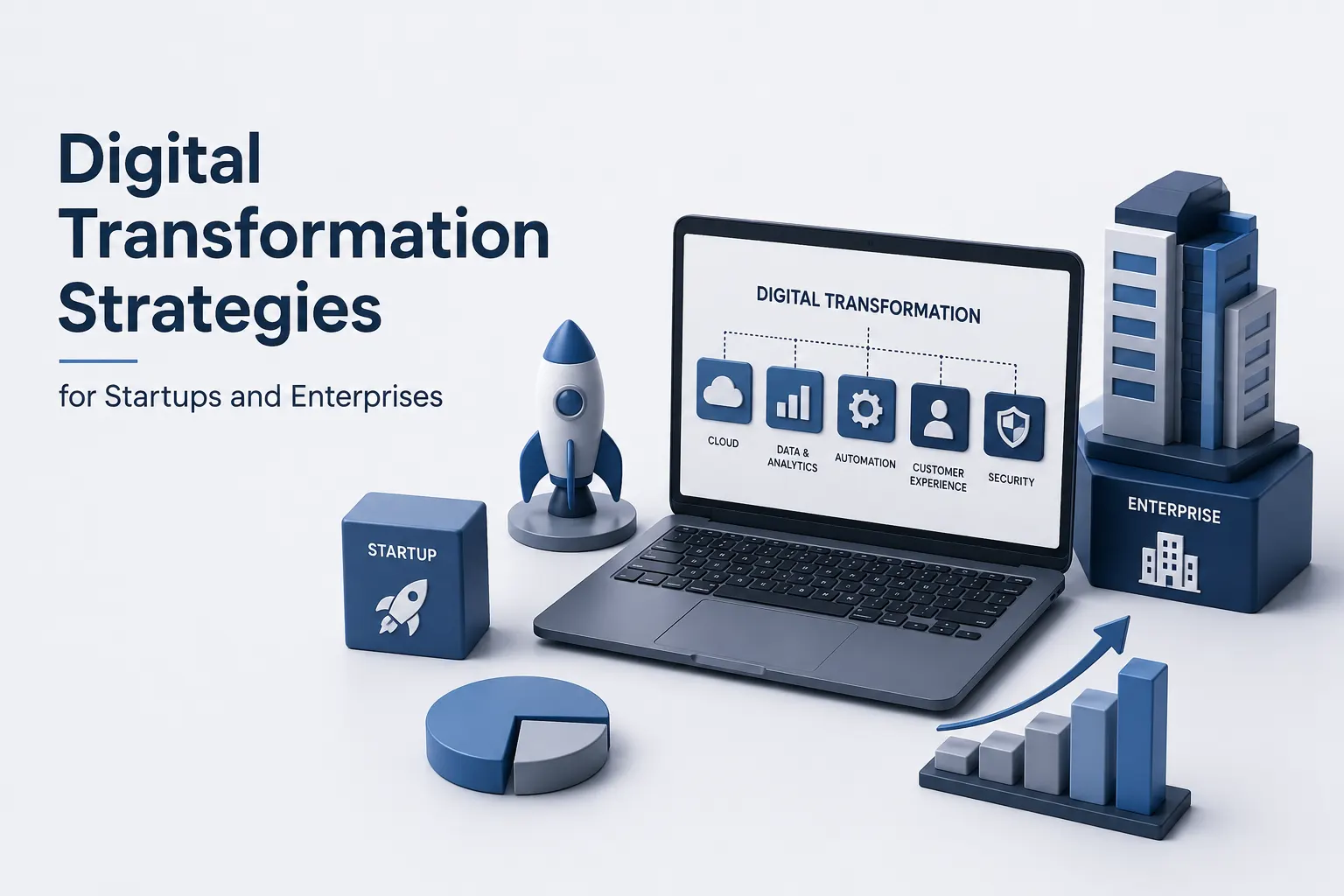
Digital Transformation Strategies for Startups and Enterprises in the USA
Introduction
Technology adoption is no longer a competitive advantage alone. It has become a fundamental requirement for business growth and long-term sustainability. Organizations that embrace digital innovation can respond faster to market changes, improve customer experiences, and optimize internal operations.
The digital economy continues to evolve as cloud computing, artificial intelligence, and automation reshape traditional business models. Startups are leveraging modern technologies to scale rapidly, while established enterprises are modernizing legacy systems to remain competitive.
Successful Digital Transformation requires more than implementing new software. It involves aligning technology, people, and processes to create a more agile and efficient organization capable of adapting to future opportunities.
Why This Matters
Organizations that invest in Digital Transformation position themselves for stronger growth and operational efficiency.
- Improves business agility
- Enhances customer experiences
- Supports data-driven decision making
- Increases operational efficiency
- Creates competitive advantages
Build a Strong Digital Foundation
Every transformation initiative begins with a clear technology strategy. Businesses must evaluate their existing systems, identify operational challenges, and define measurable objectives before implementing new solutions.
Without a structured foundation, digital projects often struggle to deliver meaningful business outcomes.
Key Points
- Assess current technology infrastructure
- Identify operational bottlenecks
- Establish measurable business goals
- Create a phased implementation roadmap
Example / Use Case
A startup launching a digital platform may begin by implementing cloud-based systems that support future growth while reducing infrastructure costs.
Embrace Cloud Solutions for Scalability
Cloud technology remains one of the most important drivers of Digital Transformation. Organizations can scale resources, improve accessibility, and reduce infrastructure management requirements through cloud adoption.
Businesses seeking flexible digital environments often partner with MatchBest Software to implement cloud strategies that align with long-term growth objectives.
Key Points
- Lower infrastructure costs
- Improved business flexibility
- Enhanced remote accessibility
- Faster deployment capabilities
Example / Use Case
An expanding e-commerce company can use cloud infrastructure to handle increasing customer demand without investing heavily in physical servers.
Integrate Artificial Intelligence into Business Operations
Artificial intelligence is helping organizations automate repetitive tasks, improve decision-making, and enhance customer interactions. AI technologies are becoming central components of modern business transformation initiatives.
Many organizations work with an experienced AI Software Development Company USA to build intelligent systems that support operational efficiency and innovation.
Key Points
- Intelligent process automation
- Predictive analytics capabilities
- Improved customer engagement
- Enhanced business insights
Example / Use Case
A financial services company can use AI-powered analytics to identify customer trends and provide personalized service recommendations.
Modernize Legacy Systems
Many enterprises continue to rely on outdated software that limits flexibility and innovation. Legacy systems often create operational inefficiencies and increase maintenance costs.
Modernization initiatives allow organizations to improve performance while integrating newer technologies such as cloud computing and automation.
Key Points
- Improved system performance
- Reduced maintenance expenses
- Better integration capabilities
- Enhanced security controls
Example / Use Case
A manufacturing company can replace disconnected legacy applications with a unified digital platform that improves visibility across operations.
Automate Core Business Processes
Process automation helps businesses improve efficiency while reducing manual workloads. Organizations can streamline repetitive tasks and allow employees to focus on strategic initiatives.
Automation also improves accuracy and consistency across departments.
Key Points
- Reduced manual effort
- Improved operational efficiency
- Faster business processes
- Enhanced productivity
Example / Use Case
An HR department can automate employee onboarding, document management, and approval workflows to improve administrative efficiency.
Focus on Customer-Centric Innovation
Digital Transformation should ultimately improve customer experiences. Organizations that prioritize customer needs often achieve stronger engagement, loyalty, and revenue growth.
Technology investments should support seamless interactions across digital channels and communication platforms.
Key Points
- Personalized customer experiences
- Faster response times
- Better service delivery
- Improved customer retention
Example / Use Case
A retail business can implement digital customer portals that provide order tracking, account management, and personalized recommendations.
Accelerate Innovation with Emerging Technologies
Modern organizations are increasingly exploring advanced platforms that combine artificial intelligence, automation, and cloud capabilities.
Businesses evaluating next-generation digital ecosystems often explore solutions such as AVA Suite to streamline operations and accelerate innovation initiatives.
Key Points
- Faster innovation cycles
- Improved business intelligence
- Greater operational visibility
- Enhanced digital capabilities
Example / Use Case
A growing enterprise can integrate AI-driven automation tools to optimize customer engagement and internal workflows simultaneously.
Key Benefits
- Improved business scalability
- Enhanced customer experiences
- Faster decision-making
- Reduced operational costs
- Greater organizational agility
- Stronger market competitiveness
- Increased employee productivity
- Better technology utilization
Common Mistakes
- Starting without a clear strategy
- Ignoring employee adoption challenges
- Modernizing too many systems simultaneously
- Underestimating change management requirements
- Failing to establish measurable objectives
- Overlooking cybersecurity considerations
Future Trends
The future of Digital Transformation will be shaped by intelligent automation, AI-driven decision-making, and increasingly connected digital ecosystems. Businesses will rely more heavily on predictive technologies to identify opportunities and optimize operations proactively.
Cloud-native platforms will continue replacing traditional infrastructure models, enabling organizations to innovate more quickly while maintaining flexibility. At the same time, generative AI and autonomous agents will play larger roles in customer service, operations, and business intelligence.
Organizations that adopt these technologies strategically will be better positioned to compete in rapidly evolving markets while delivering greater value to customers and stakeholders.
Conclusion
Digital Transformation is no longer limited to large enterprises. Startups and established organizations alike are leveraging cloud technologies, artificial intelligence, and automation to improve performance and accelerate growth.
Successful transformation requires a combination of strategic planning, technology modernization, and continuous innovation. Businesses that align digital initiatives with operational objectives can create sustainable advantages in an increasingly competitive environment.
The organizations leading tomorrow's markets are investing in digital capabilities today. Building a strong transformation roadmap now can unlock long-term growth, efficiency, and resilience.
FAQ Section
1. What is Digital Transformation?
Digital Transformation involves using technology to improve business processes, customer experiences, and operational efficiency across an organization.
2. Why are Cloud Solutions important for digital transformation?
Cloud Solutions provide scalability, flexibility, accessibility, and cost efficiency, making them a critical component of modern transformation initiatives.
3. How does AI contribute to Digital Transformation?
AI improves automation, analytics, customer engagement, and decision-making, helping organizations operate more efficiently.
4. Can startups benefit from Digital Transformation?
Yes. Startups can use digital technologies to scale operations faster, reduce costs, and compete effectively in dynamic markets.
5. What is the biggest challenge during digital transformation?
One of the most common challenges is managing organizational change while ensuring employees adopt new technologies and workflows successfully.
Latest Article
Digital Transformation with ERP Solutions
Previous Blogs
Vulnerability Assessment & Penetration Testing Guide
Author
Written by: Andrew