

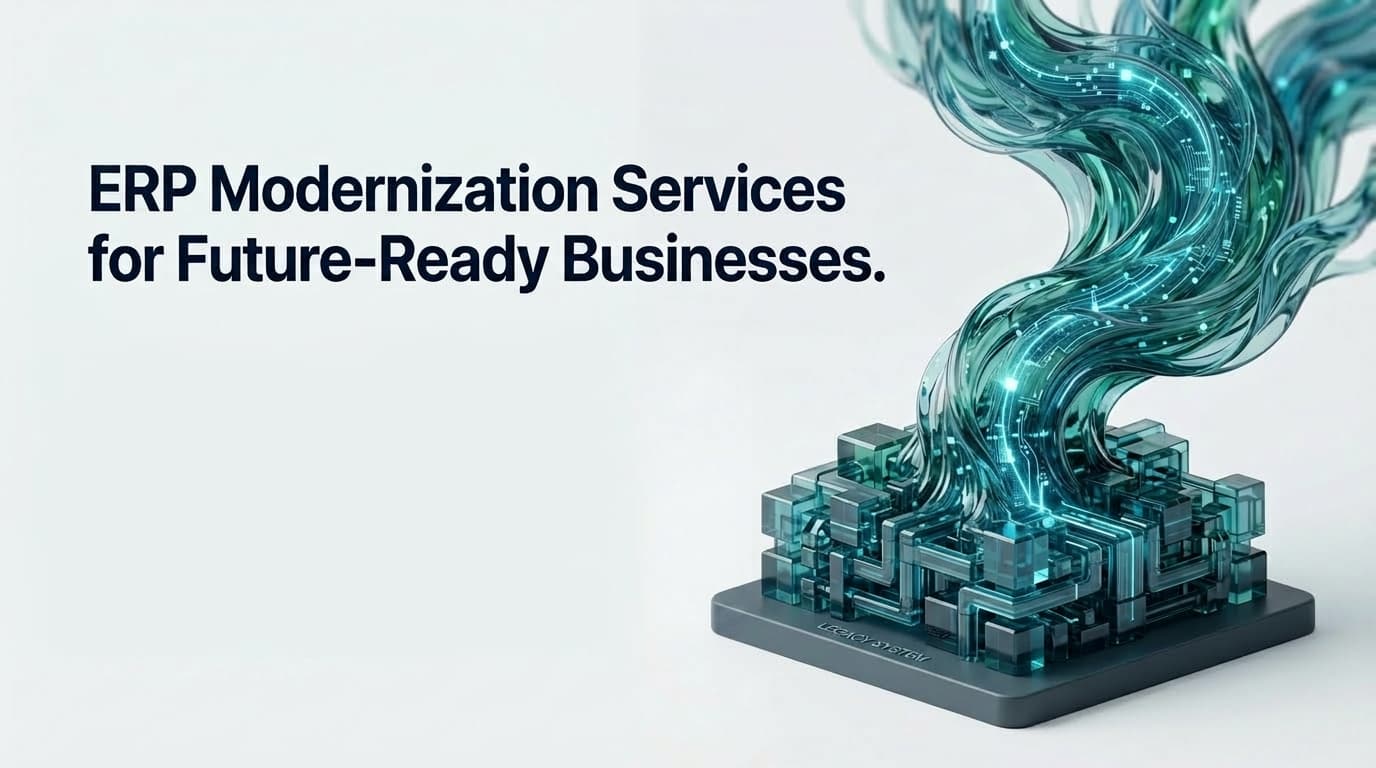
ERP Modernization Services: Upgrading Legacy Systems for the Future
Introduction
Many organizations still rely on aging ERP platforms that were implemented years ago. While these systems once supported business growth, they often struggle to meet today's demands for flexibility, automation, and real-time data access.
As markets become more competitive, businesses need faster decision-making and seamless integration across departments. This is where ERP modernization services play a critical role in helping organizations transform outdated infrastructure.
Modern ERP solutions improve efficiency, reduce operational costs, and support digital transformation initiatives. Companies across the USA and UAE are investing in software modernization services to remain competitive and future-ready.
Businesses that modernize their ERP environments gain better visibility, improved scalability, and stronger customer experiences. Modern platforms also support cloud technologies, artificial intelligence, and advanced analytics capabilities.
Why This Matters
Legacy ERP systems can create bottlenecks that slow innovation and increase maintenance expenses. Modernization helps businesses unlock greater value from their technology investments.
Key Reasons Organizations Modernize ERP Systems
- Improve operational efficiency and productivity
- Reduce maintenance and infrastructure costs
- Enable cloud-based business processes
- Strengthen security and compliance capabilities
- Support future growth and scalability
Core Concepts and Main Sections
Understanding ERP Modernization Services
ERP modernization services focus on upgrading outdated enterprise systems with modern technologies. The goal is to improve performance, integration capabilities, and user experience while minimizing business disruption.
Key Points
- Replace outdated architecture
- Improve application performance
- Enable cloud adoption strategies
- Support automation initiatives
- Enhance reporting capabilities
Example / Use Case
A manufacturing company using a decade-old ERP platform struggled with slow reporting. After modernization, the company achieved real-time analytics and significantly improved operational visibility.
Custom ERP Software for Business-Specific Needs
Many businesses have unique workflows that generic ERP platforms cannot fully support. Custom ERP software allows organizations to align technology with their specific operational requirements.
Key Points
- Supports industry-specific workflows
- Improves process standardization
- Enhances user adoption rates
- Integrates with existing business tools
- Scales alongside business growth
Example / Use Case
A healthcare provider implemented custom ERP software to manage patient administration, billing, and compliance processes within a single platform, improving operational efficiency.
Legacy Application Modernization and ERP Transformation
ERP systems often depend on older applications that create integration challenges. Legacy application modernization helps organizations upgrade supporting systems while maintaining business continuity.
Key Points
- Eliminate technical debt
- Improve interoperability
- Increase system reliability
- Strengthen security measures
- Simplify future upgrades
Example / Use Case
A financial services company modernized several legacy applications connected to its ERP platform. This resulted in faster transaction processing and reduced maintenance costs.
Cloud-Driven ERP Modernization
Cloud technologies have become a major driver behind ERP modernization efforts. Cloud-based ERP environments provide flexibility, accessibility, and lower infrastructure requirements.
Key Points
- Reduce hardware dependencies
- Enable remote workforce access
- Improve disaster recovery capabilities
- Lower operational expenses
- Accelerate deployment timelines
Example / Use Case
A retail company migrated its ERP environment to the cloud and improved inventory visibility across multiple locations while reducing infrastructure management overhead.
App Modernization Services and ERP Integration
Modern ERP environments require seamless communication between applications. App modernization services help organizations update existing applications to work efficiently with modern ERP platforms.
Key Points
- Improve API connectivity
- Enhance user experience
- Support mobile accessibility
- Enable real-time data exchange
- Increase application performance
Example / Use Case
A logistics company modernized its mobile applications and integrated them with its ERP system. This allowed field teams to access inventory and delivery information instantly.
Key Benefits
- Increased operational efficiency
- Improved data accuracy and visibility
- Better customer and employee experiences
- Enhanced security and compliance
- Reduced maintenance expenses
- Greater scalability for future growth
- Faster access to business insights
- Stronger integration capabilities
Common Mistakes
- Delaying modernization until systems fail
- Migrating without a clear roadmap
- Ignoring employee training requirements
- Overlooking data quality issues
- Failing to define measurable objectives
- Underestimating integration complexity
- Choosing technology without business alignment
Future Trends
ERP modernization continues to evolve as organizations embrace artificial intelligence, automation, and cloud-native architectures. Future ERP platforms will become increasingly intelligent, helping businesses automate routine tasks and generate predictive insights.
Organizations are also investing in low-code development, advanced analytics, and AI-powered workflows. These innovations will help businesses accelerate decision-making while reducing operational complexity.
Companies seeking long-term growth should view ERP modernization as an ongoing strategy rather than a one-time project. Continuous improvement will remain essential in an increasingly digital business environment.
For organizations planning digital transformation initiatives, partnering with experts like Matchbest Software can help ensure successful ERP modernization outcomes.
Businesses can also explore comprehensive technology solutions through Matchbest Software Services to support modernization, cloud adoption, and enterprise innovation.
Conclusion
Modern businesses cannot afford to rely on outdated ERP systems that limit agility and innovation. ERP modernization services provide a clear path toward improved efficiency, scalability, and business performance.
Whether your organization requires custom ERP software, legacy application modernization, or app modernization services, investing in modernization today helps prepare your business for tomorrow's challenges.
Organizations that act now will gain stronger competitive advantages and build a more resilient digital foundation for future growth.
FAQ Section
1. What are ERP modernization services?
ERP modernization services involve upgrading outdated ERP systems to improve performance, security, scalability, and integration capabilities while supporting modern business requirements.
2. Why is legacy application modernization important?
Legacy application modernization reduces technical debt, improves system reliability, and enables better integration with modern technologies and business processes.
3. How does custom ERP software benefit businesses?
Custom ERP software supports unique business workflows, improves operational efficiency, and provides greater flexibility compared to generic ERP solutions.
4. What role does cloud technology play in ERP modernization?
Cloud technology improves accessibility, scalability, security, and disaster recovery while reducing infrastructure management costs.
5. How long does ERP modernization typically take?
Project timelines vary depending on system complexity, business requirements, and migration scope. Most initiatives range from several months to over a year.
Latest Article
👉 Best Practices for Setting Up an AI Center of Excellence
Previous Blogs
Author
Written by: Andrew