

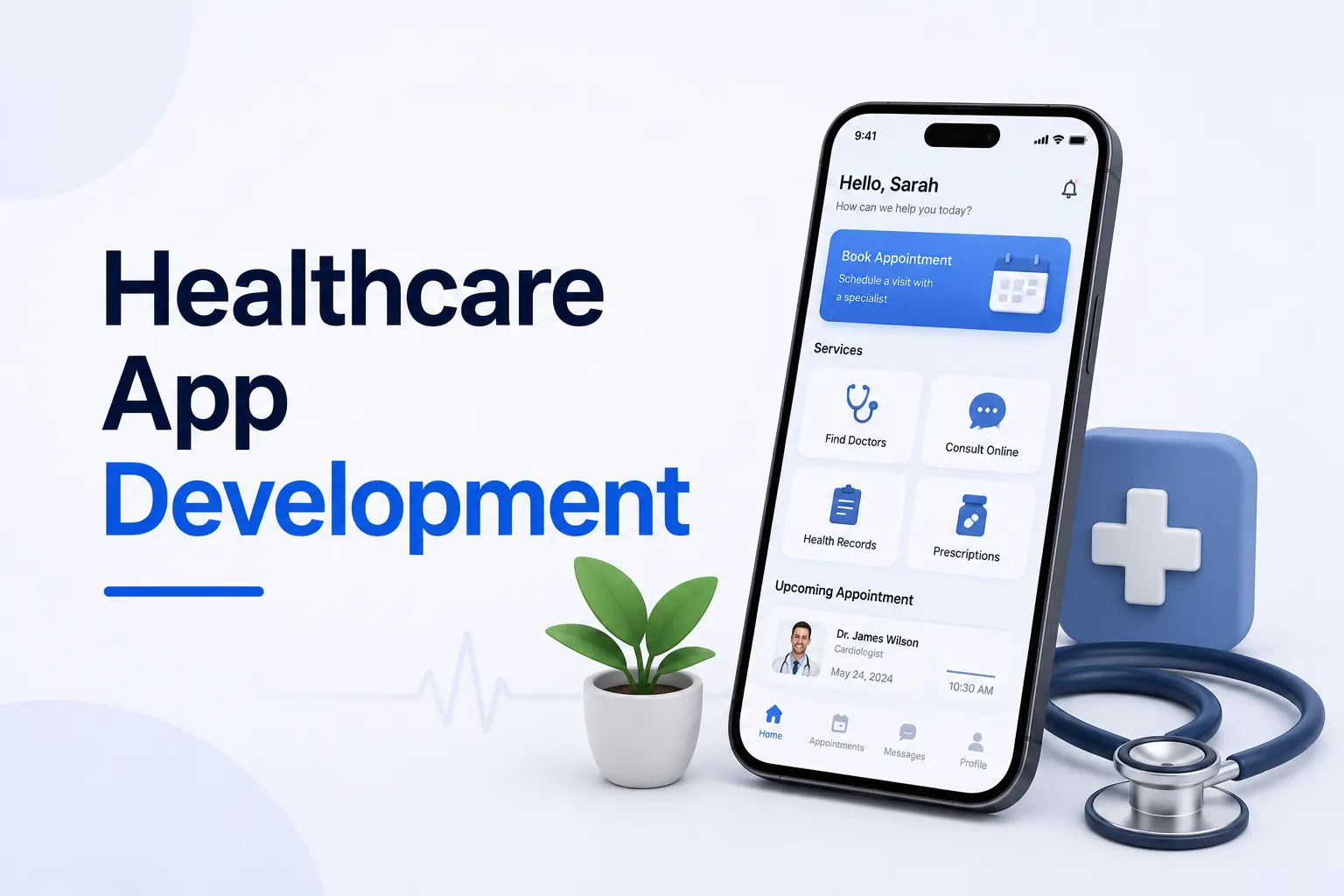
Healthcare App Development: The Complete Guide to Building Secure and Scalable Healthcare Applications in 2026
The healthcare industry is rapidly embracing digital transformation to improve patient care, streamline operations, and enhance accessibility. From telemedicine platforms and patient portals to remote monitoring solutions and hospital management systems, healthcare applications have become essential tools for modern healthcare providers.
As patient expectations evolve and healthcare organizations seek greater efficiency, healthcare app development has emerged as a strategic investment. Healthcare applications enable providers to deliver better experiences, improve clinical outcomes, and optimize operational workflows while maintaining strict compliance with healthcare regulations.
However, healthcare software development requires more than standard application development. Organizations must prioritize security, scalability, interoperability, compliance, and user experience to create effective digital health solutions.
Healthcare providers seeking innovative healthcare technology solutions can explore HealNova Care, a comprehensive healthcare platform designed to support modern healthcare operations and patient engagement.
What Is Healthcare App Development?
Healthcare app development refers to the design, development, deployment, and maintenance of software applications specifically created for healthcare providers, hospitals, clinics, medical professionals, and patients.
These applications help manage healthcare services, improve communication, automate workflows, and deliver better patient experiences.
Types of Healthcare Applications
Telemedicine Applications
Platforms that enable virtual consultations between patients and healthcare providers.
Patient Management Systems
Applications designed to manage appointments, medical records, and patient communications.
Remote Patient Monitoring Apps
Solutions that track patient health metrics outside clinical environments.
Healthcare CRM Platforms
Systems that improve patient engagement and communication.
Hospital Management Systems
Comprehensive solutions that streamline hospital operations and administration.
Example
A healthcare provider can implement a mobile application that allows patients to book appointments, access medical records, consult doctors virtually, receive prescriptions, and manage healthcare information from a single platform.
Why Healthcare App Development Matters in 2026
Healthcare organizations face increasing challenges related to patient expectations, operational efficiency, and regulatory compliance.
Common Healthcare Challenges
- Long patient wait times
- Administrative inefficiencies
- Fragmented healthcare data
- Limited patient engagement
- Rising operational costs
- Accessibility concerns
- Compliance requirements
Healthcare applications help organizations address these challenges while improving care delivery.
Healthcare Impact Comparison
| Challenge | Traditional Healthcare Operations | Healthcare App Development |
|---|---|---|
| Appointment Scheduling | Manual Process | Automated Booking |
| Patient Communication | Phone Calls | Digital Engagement |
| Medical Records Access | Limited Availability | Instant Access |
| Remote Care | Restricted | Telehealth Solutions |
| Operational Efficiency | Moderate | Significantly Improved |
| Patient Experience | Inconsistent | Personalized Experience |
Healthcare organizations that invest in digital solutions often improve both patient satisfaction and operational performance.
Key Features of Healthcare App Development
Telemedicine Integration
Telemedicine has become a critical component of modern healthcare delivery.
Benefits
- Increased accessibility
- Reduced travel requirements
- Faster consultations
- Improved patient convenience
Real-World Example
Patients in remote locations can consult specialists through video appointments without visiting healthcare facilities.
Electronic Health Record (EHR) Management
Healthcare applications often integrate with electronic health records.
Benefits
- Centralized patient information
- Improved clinical decision-making
- Better care coordination
- Reduced administrative burden
Real-World Example
Doctors can access patient histories instantly during consultations, improving treatment accuracy.
Appointment Scheduling and Management
Automated scheduling systems improve operational efficiency.
Benefits
- Reduced no-shows
- Better resource utilization
- Improved patient satisfaction
- Streamlined workflows
Real-World Example
Patients can book, reschedule, and receive appointment reminders directly through mobile applications.
Secure Patient Communication
Healthcare applications enable secure communication between providers and patients.
Benefits
- Faster response times
- Better patient engagement
- Improved care coordination
- Enhanced patient trust
Real-World Example
Patients can securely message healthcare providers regarding prescriptions and follow-up care.
Remote Patient Monitoring
Connected healthcare applications support continuous monitoring of patient health.
Benefits
- Early intervention
- Reduced hospital readmissions
- Better chronic disease management
- Improved patient outcomes
Real-World Example
Patients with chronic conditions can share real-time health metrics with healthcare providers.
Healthcare App Development vs Traditional Healthcare Systems
Healthcare providers often compare digital health solutions with traditional operational models.
Understanding the Difference
| Feature | Traditional Healthcare Systems | Healthcare Applications |
|---|---|---|
| Accessibility | Limited Hours | 24/7 Availability |
| Patient Engagement | Reactive | Continuous |
| Data Access | Restricted | Real-Time |
| Communication | Manual | Digital |
| Scalability | Limited | High |
| Care Delivery | Location-Based | Hybrid Care Models |
| Operational Efficiency | Moderate | High |
Which Approach Is Better?
Healthcare applications complement traditional healthcare services by improving accessibility, efficiency, and patient experiences while supporting better care delivery.
Benefits of Healthcare App Development
Improved Patient Experience
Patients gain easier access to healthcare services and information.
Increased Operational Efficiency
Automation reduces administrative workloads and improves productivity.
Better Patient Engagement
Digital tools encourage proactive healthcare management.
Enhanced Data Management
Healthcare organizations can manage patient information more effectively.
Reduced Operational Costs
Automation and digital workflows lower administrative expenses.
Greater Accessibility
Patients can access healthcare services from virtually anywhere.
Real-World Healthcare App Development Examples
Hospitals
Hospitals use healthcare applications for:
- Patient registration
- Appointment scheduling
- Clinical workflow management
- Medical record access
Clinics
Clinics implement:
- Telemedicine solutions
- Patient engagement platforms
- Prescription management systems
- Billing automation
Diagnostic Centers
Diagnostic providers utilize:
- Test scheduling platforms
- Result delivery systems
- Patient communication tools
- Digital records management
Mental Health Providers
Mental health organizations develop:
- Virtual consultation platforms
- Therapy scheduling systems
- Patient support applications
- Wellness tracking tools
Home Healthcare Services
Home healthcare providers leverage:
- Remote monitoring systems
- Care coordination platforms
- Mobile caregiver applications
- Patient communication solutions
How to Choose the Right Healthcare App Development Partner
Choosing the right development company is critical for project success.
Evaluate Healthcare Industry Experience
Look for proven expertise in healthcare software development.
Assess Compliance Knowledge
Healthcare applications must support:
- HIPAA compliance
- GDPR compliance
- Healthcare security standards
- Data privacy requirements
Review Integration Capabilities
Applications should integrate with:
- EHR systems
- Hospital management systems
- Billing software
- Telehealth platforms
Prioritize Security
Healthcare data requires advanced protection measures.
Consider Scalability
Choose solutions designed for future growth and evolving healthcare requirements.
Why Matchbest Software Is the Ideal Healthcare App Development Partner
Successful healthcare applications require deep technical expertise and healthcare industry understanding.
Matchbest Software vs Generic App Development Agencies
| Criteria | Matchbest Software | Generic Development Agency |
|---|---|---|
| Healthcare Domain Expertise | ✓ | Limited |
| Compliance-Focused Development | ✓ | Partial |
| Healthcare Workflow Knowledge | ✓ | Limited |
| Scalable Architecture | ✓ | Varies |
| Security-First Development | ✓ | Basic |
| Long-Term Support | ✓ | Additional Cost |
| End-to-End Development | ✓ | Limited |
Matchbest Software USP
Healthcare-Focused Solutions
Applications are built around real healthcare workflows and operational requirements.
Compliance and Security Expertise
Security and regulatory requirements are integrated throughout the development lifecycle.
Scalable Healthcare Platforms
Solutions are designed to support growing patient volumes and organizational expansion.
Modern Technology Stack
Applications leverage advanced technologies including AI, cloud computing, and automation.
Dedicated Healthcare Innovation
Healthcare organizations can accelerate digital transformation through HealNova Care, a platform designed to improve patient engagement, streamline operations, and support healthcare providers.
Expert Recommendations for Successful Healthcare App Development
Step 1: Define Clinical and Business Objectives
Identify the primary healthcare challenges the application will solve.
Step 2: Prioritize Patient Experience
Design user-friendly experiences for both patients and healthcare providers.
Step 3: Build Security into Every Layer
Healthcare applications must prioritize privacy and data protection.
Step 4: Ensure Regulatory Compliance
Compliance should be integrated from the earliest development stages.
Step 5: Plan for Interoperability
Applications should communicate seamlessly with healthcare systems.
Step 6: Continuously Improve Through Analytics
Use performance data and patient feedback to optimize application performance.
Future Trends in Healthcare App Development
AI-Powered Healthcare Solutions
Artificial intelligence will enhance diagnostics, patient engagement, and workflow automation.
Remote Care Expansion
Telemedicine and virtual care services will continue growing globally.
Predictive Healthcare Analytics
Organizations will use data-driven insights to improve patient outcomes.
Wearable Device Integration
Healthcare applications will increasingly connect with wearable health technologies.
Personalized Patient Experiences
Digital health platforms will provide more customized healthcare journeys.
Frequently Asked Questions
What is healthcare app development?
Healthcare app development involves creating software solutions designed for healthcare providers, organizations, and patients.
Why are healthcare applications important?
They improve patient experiences, increase operational efficiency, and enhance healthcare accessibility.
How long does healthcare app development take?
Development timelines vary depending on features, integrations, and compliance requirements.
Are healthcare apps secure?
Yes, when developed properly with encryption, authentication, compliance controls, and security best practices.
What healthcare organizations benefit from healthcare applications?
Hospitals, clinics, diagnostic centers, telemedicine providers, insurance companies, and home healthcare organizations all benefit.
Can healthcare applications integrate with existing systems?
Yes, modern healthcare applications can integrate with EHR platforms, hospital systems, billing software, and telehealth solutions.
Conclusion
Healthcare app development is transforming how healthcare organizations deliver services, engage patients, and manage operations. As digital healthcare adoption continues to accelerate, organizations need secure, scalable, and patient-focused applications that improve outcomes and operational efficiency.
Whether implementing telemedicine platforms, patient management systems, remote monitoring solutions, or healthcare engagement applications, investing in healthcare app development enables organizations to remain competitive while delivering better patient care.
Matchbest Software combines healthcare expertise, modern development capabilities, compliance-focused architecture, and scalable technology solutions to help healthcare providers successfully navigate digital transformation. Through solutions like HealNova Care, healthcare organizations can build future-ready digital experiences that improve both operational performance and patient satisfaction.