
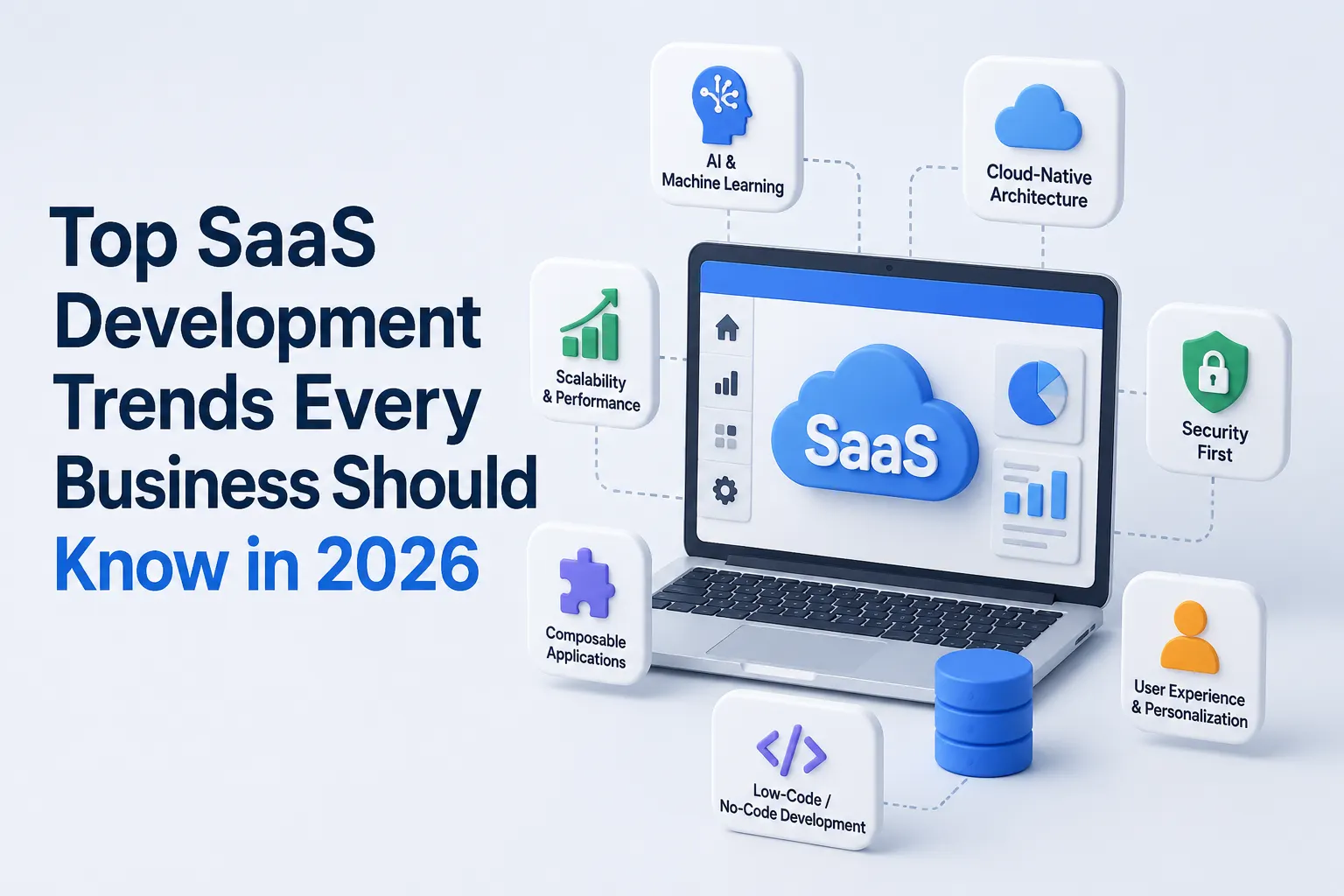
Top SaaS Development Trends Every Business Should Know in 2026
Introduction
The software industry is moving faster than ever, and SaaS platforms remain at the center of digital innovation. Organizations are increasingly shifting from traditional software models to cloud-based solutions that offer flexibility, scalability, and continuous updates.
As customer expectations continue to evolve, businesses need applications that adapt quickly to market changes. This demand is driving new trends in SaaS Development, helping companies deliver better experiences while reducing operational complexity.
For businesses across the USA and UAE, understanding these trends is no longer optional. The right SaaS strategy can improve efficiency, accelerate growth, and create a lasting competitive advantage.
Why This Matters
Emerging SaaS trends are shaping how organizations build, deploy, and manage software solutions.
- Accelerates digital transformation initiatives
- Improves business scalability and flexibility
- Enhances customer experiences
- Reduces operational overhead
- Supports faster innovation cycles
AI-Powered SaaS Is Becoming the New Standard
Artificial intelligence is rapidly transforming SaaS Development. Modern platforms are moving beyond basic automation and incorporating intelligent features that improve decision-making and user experiences.
Companies are increasingly seeking software that can analyze data, identify patterns, and automate repetitive tasks without requiring constant human intervention.
Key Points
- Predictive analytics capabilities
- Automated workflow management
- Intelligent customer interactions
- Personalized user experiences
Example / Use Case
A sales platform powered by AI can identify high-conversion prospects and recommend actions for sales representatives. This helps teams focus on opportunities that generate greater revenue.
Vertical SaaS Solutions Are Gaining Momentum
Businesses often struggle with generic software that lacks industry-specific functionality. Vertical SaaS platforms address this challenge by providing specialized tools designed for particular industries.
Healthcare providers, manufacturers, logistics companies, and financial organizations are increasingly adopting industry-focused solutions to improve efficiency and compliance.
Key Points
- Industry-specific features
- Faster implementation timelines
- Reduced customization costs
- Improved regulatory compliance
Example / Use Case
A healthcare SaaS platform may combine patient scheduling, billing management, and compliance reporting into a single solution tailored for medical organizations.
Cloud-Native Architecture Is Driving Modern Platforms
Cloud-native development has become a major trend because it improves performance, scalability, and reliability. Businesses are replacing legacy infrastructure with flexible cloud environments that support continuous innovation.
Organizations investing in SaaS products often partner with MatchBest Software to build scalable cloud-native applications that can support future business growth.
Key Points
- Enhanced application performance
- Improved scalability
- Faster deployment cycles
- Reduced infrastructure management
Example / Use Case
An e-commerce SaaS platform can automatically scale resources during major sales events, ensuring a seamless customer experience even during traffic spikes.
Low-Code and No-Code Features Continue to Expand
The demand for rapid software delivery is encouraging SaaS providers to integrate low-code and no-code capabilities. These features enable business teams to customize workflows without extensive programming knowledge.
As a result, organizations can respond more quickly to changing requirements while reducing dependence on development resources.
Key Points
- Faster process automation
- Increased business agility
- Reduced development bottlenecks
- Greater employee participation
Example / Use Case
Marketing teams can create automated campaign workflows and reporting dashboards without waiting for dedicated development support.
Security-First Development Is Essential
Cybersecurity concerns continue to influence Software Development decisions. SaaS providers are placing greater emphasis on protecting user data through advanced security frameworks and compliance standards.
Companies looking to strengthen their cloud applications often evaluate comprehensive Innovative Solutions that combine security, performance, and scalability within a unified technology strategy.
Key Points
- End-to-end data encryption
- Multi-factor authentication
- Continuous monitoring systems
- Compliance management tools
Example / Use Case
Financial organizations can deploy secure SaaS platforms that protect sensitive customer information while meeting industry regulations.
API-First Development Is Improving Connectivity
Modern businesses rely on multiple software systems working together. API-first development enables SaaS platforms to integrate seamlessly with existing tools and services.
This approach improves operational efficiency by creating connected ecosystems that support data sharing and automation across departments.
Key Points
- Easier integrations
- Better data synchronization
- Improved user experiences
- Faster platform expansion
Example / Use Case
A SaaS-based CRM can connect with accounting, marketing, and customer support systems, providing a complete view of customer interactions.
Key Benefits
- Faster software deployment
- Improved scalability
- Lower infrastructure costs
- Better customer experiences
- Enhanced operational efficiency
- Greater business flexibility
- Stronger security controls
- Continuous innovation opportunities
Common Mistakes
- Ignoring future scalability requirements
- Choosing software based only on price
- Overlooking security considerations
- Failing to plan integration strategies
- Neglecting user experience design
- Delaying performance optimization efforts
Future Trends
The next phase of SaaS Development will focus heavily on autonomous business processes powered by artificial intelligence. Software platforms will become more proactive, helping organizations identify opportunities and risks before they occur.
Another major trend is composable SaaS architecture. Businesses will combine specialized services to create highly customized ecosystems that can evolve alongside organizational needs.
Edge computing, advanced analytics, and industry-specific AI capabilities will further transform SaaS platforms throughout 2026 and beyond. Organizations that embrace these innovations early will gain significant operational advantages.
Conclusion
SaaS Development continues to evolve as businesses demand more intelligent, scalable, and secure software solutions. The trends shaping 2026 are focused on helping organizations improve efficiency while adapting quickly to changing market conditions.
From AI-powered capabilities to cloud-native infrastructure and API-first development, modern SaaS platforms offer significant opportunities for growth and innovation. Companies that understand and adopt these trends can position themselves for long-term success in an increasingly digital marketplace.
FAQ Section
1. What is SaaS Development?
SaaS Development involves creating software applications delivered through the cloud, allowing users to access services through a web browser without local installation.
2. Why are SaaS platforms growing in popularity?
SaaS platforms provide scalability, flexibility, lower infrastructure costs, and easier maintenance compared to traditional software solutions.
3. How does AI improve SaaS applications?
AI enhances automation, predictive analytics, personalization, and operational efficiency by helping software make intelligent decisions based on data.
4. What is a cloud-native SaaS platform?
A cloud-native platform is built specifically for cloud environments using technologies such as microservices, containers, and serverless computing.
5. Why is API-first development important?
API-first development improves integration capabilities, allowing businesses to connect SaaS applications with existing systems and workflows more efficiently.
Latest Article
Top AI Automation Trends Transforming Businesses in 2026
Previous Blogs
ERP Integration with Cloud Infrastructure Guide
Author
Written by: Andrew