

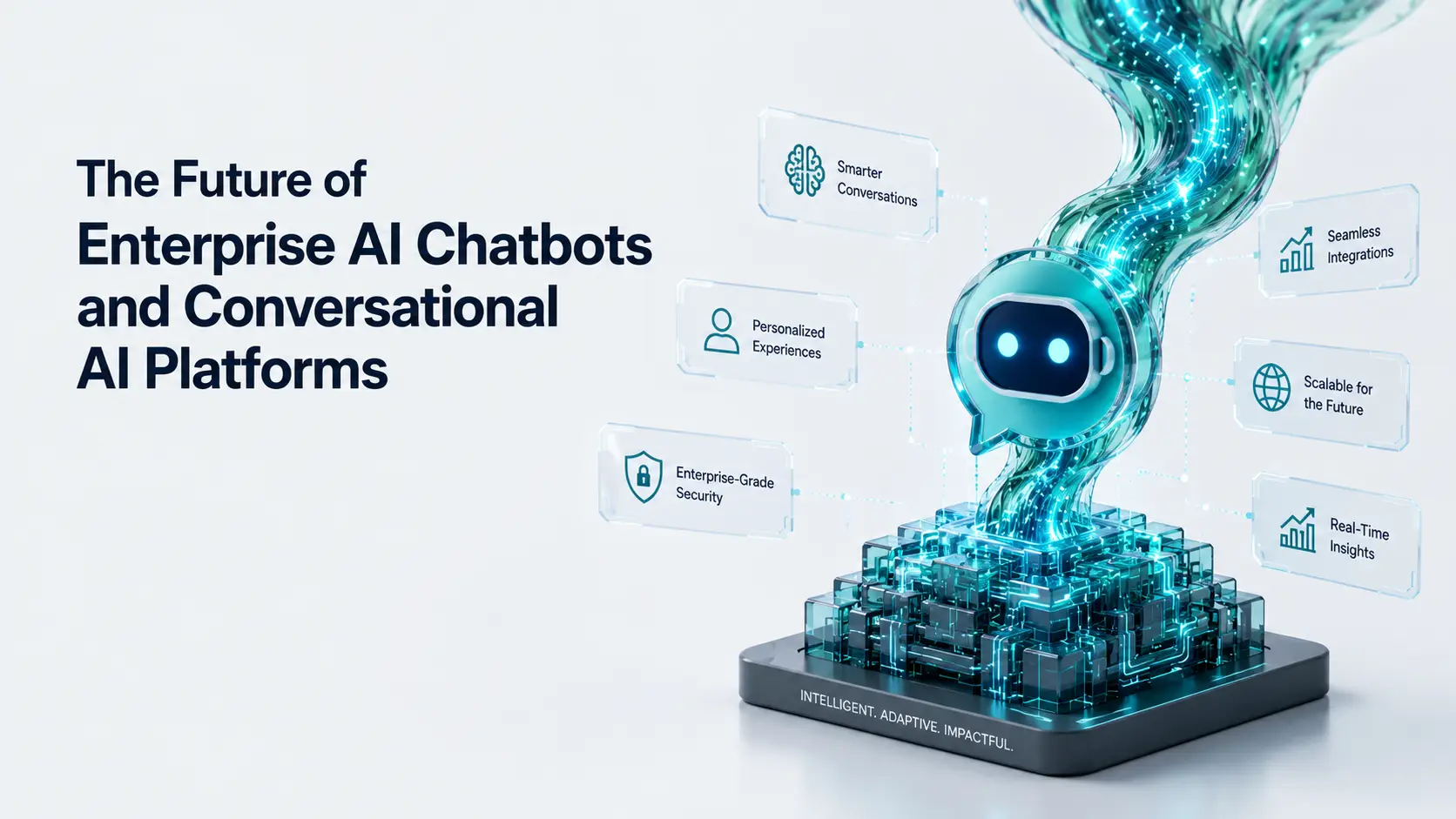
The Future of Enterprise AI Chatbots and Conversational AI Platforms
Introduction
Artificial intelligence is transforming how businesses communicate with customers, employees, and partners. Enterprise AI chatbots are no longer simple support tools. They have evolved into intelligent assistants that can automate workflows, answer complex questions, and improve business productivity.
Organizations across the USA and UAE are investing heavily in conversational AI platforms to deliver faster service and better customer experiences. These platforms help companies reduce operational costs while maintaining personalized interactions at scale.
As digital transformation accelerates, AI-powered communication tools are becoming a core part of modern business strategies. Combined with enterprise software solutions and enterprise application services, conversational AI is shaping the future of intelligent enterprises.
Why This Matters
Businesses face increasing pressure to provide instant responses and seamless customer experiences. AI chatbots help organizations meet these expectations while improving operational efficiency.
Why enterprises are adopting conversational AI:
- Improve customer support availability around the clock
- Reduce response times for common inquiries
- Automate repetitive business processes
- Increase employee productivity and collaboration
- Deliver personalized experiences across channels
Core Concepts and Main Sections
AI Chatbots Are Becoming Enterprise Digital Assistants
Modern AI chatbots can perform much more than answering customer questions. They integrate with business systems, analyze data, and support decision-making across departments.
Key Points
- Natural language understanding capabilities
- Context-aware conversations
- Integration with business applications
- Real-time information retrieval
- Continuous learning and optimization
Example / Use Case
A manufacturing company can deploy an AI assistant that helps employees check inventory levels, create purchase requests, and access operational reports without switching between multiple systems.
Conversational AI and Enterprise Software Integration
The future of conversational AI depends on deep integration with enterprise software solutions. Businesses want AI assistants that connect seamlessly with ERP, CRM, HR, and finance platforms.
Key Points
- Unified access to enterprise data
- Improved workflow automation
- Faster information retrieval
- Enhanced employee experiences
- Better operational visibility
Example / Use Case
An enterprise chatbot connected to custom ERP software can instantly provide order status, inventory availability, and procurement updates to employees and customers.
AI-Powered Customer Experience Transformation
Customer expectations continue to evolve rapidly. Conversational AI platforms help organizations provide personalized support across websites, mobile applications, and messaging channels.
Key Points
- Personalized recommendations
- Omnichannel communication
- Faster issue resolution
- Improved customer satisfaction
- Consistent service quality
Example / Use Case
A retail organization can use conversational AI to recommend products, track orders, and answer customer questions through a single intelligent assistant available 24/7.
The Role of Software Product Engineering
Software product engineering plays a critical role in building scalable and secure conversational AI platforms. Businesses need customized solutions that align with industry requirements and growth objectives.
Key Points
- Custom AI platform development
- Scalable architecture design
- Security and compliance management
- Integration with existing systems
- Continuous platform enhancements
Example / Use Case
A healthcare provider can develop a secure conversational platform that helps patients schedule appointments while maintaining compliance with regulatory standards.
Enterprise Application Services Driving AI Adoption
Enterprise application services help organizations deploy and manage AI solutions efficiently. These services ensure smooth implementation, integration, and ongoing optimization.
Key Points
- Faster deployment timelines
- Reduced implementation risks
- Improved system performance
- Better user adoption
- Long-term scalability
Example / Use Case
A financial institution can leverage enterprise application services to integrate conversational AI into existing customer support and banking systems without disrupting operations.
Key Benefits
Organizations adopting enterprise AI chatbots can achieve several advantages:
- Enhanced customer engagement
- Reduced operational costs
- Increased employee productivity
- Faster business processes
- Improved data accessibility
- Better decision-making support
- Higher service consistency
- Scalable business operations
Common Mistakes
Many organizations fail to achieve expected results because of poor planning.
- Deploying chatbots without clear business goals
- Ignoring integration requirements
- Using low-quality training data
- Focusing only on customer support use cases
- Neglecting security and compliance considerations
- Failing to measure performance metrics
- Not providing continuous optimization
Future Trends
The future of conversational AI platforms will be defined by greater intelligence, deeper integrations, and enhanced automation capabilities. AI assistants will become proactive rather than reactive, helping users complete tasks before they even request assistance.
Generative AI, advanced analytics, and autonomous workflows will enable chatbots to handle increasingly complex business operations. Organizations will also integrate conversational AI with enterprise software solutions and custom ERP software to create unified digital ecosystems.
Voice-based interactions, multilingual support, and industry-specific AI assistants will continue to gain adoption across global markets. Businesses that invest early will be better positioned to achieve long-term competitive advantages.
Conclusion
Enterprise AI chatbots are rapidly becoming strategic business assets. They improve customer experiences, streamline operations, and support digital transformation initiatives across industries.
As conversational AI platforms continue to evolve, organizations must focus on scalable architecture, strong integrations, and continuous optimization. Partnering with experts in software product engineering and enterprise application services can help businesses maximize their AI investments.
To learn how AI-driven solutions can support your organization, explore the services offered by MatchBest Software through their website and enterprise technology solutions portfolio.
Within modern digital transformation initiatives, businesses increasingly rely on MatchBest Software for innovative technology strategies and scalable enterprise solutions. Organizations seeking implementation support can also explore specialized offerings through MatchBest Software Services.
FAQ Section
1. What is an enterprise AI chatbot?
An enterprise AI chatbot is an intelligent virtual assistant designed to support business operations. It can automate workflows, answer questions, and integrate with enterprise systems.
2. How is conversational AI different from traditional chatbots?
Traditional chatbots follow predefined rules and scripts. Conversational AI uses machine learning and natural language processing to understand context and provide more intelligent responses.
3. Can AI chatbots integrate with ERP systems?
Yes. Modern AI chatbots can integrate with custom ERP software, CRM platforms, HR systems, and other enterprise applications to provide real-time information.
4. Are enterprise AI chatbots secure?
Most enterprise-grade platforms include advanced security features, encryption, access controls, and compliance capabilities to protect sensitive business data.
5. What industries benefit most from conversational AI?
Industries such as healthcare, finance, retail, manufacturing, logistics, and technology can gain significant benefits from conversational AI implementations.
Latest Article
👉 Best Practices for Setting Up an AI Center of Excellence
Previous Blogs
Author
Written by: Andrew