

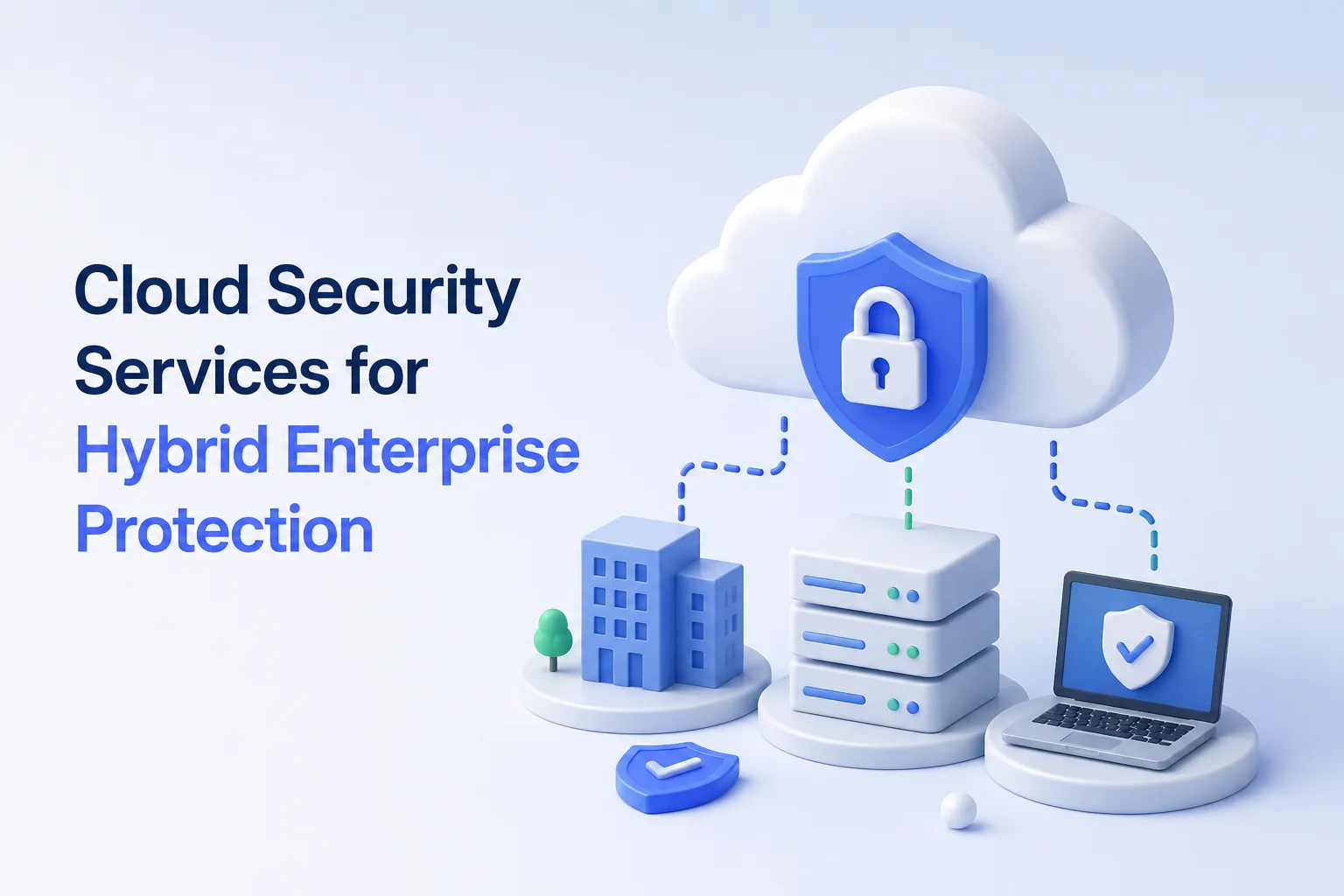
Cloud Security Services: Protecting Enterprise Data in a Hybrid Environment
Introduction
Organizations today operate across multiple environments, including public clouds, private clouds, and on-premise systems. While this flexibility improves efficiency, it also creates new security challenges that businesses must address proactively.
As companies continue their digital transformation journeys, protecting sensitive information becomes more complex. A hybrid environment increases the attack surface and introduces risks related to data access, compliance, and visibility.
This is where cloud security services play a critical role. They help organizations safeguard enterprise data, maintain compliance, and reduce cyber risks while supporting business growth and innovation.
Why This Matters
Hybrid cloud adoption continues to grow across enterprises in the USA and UAE. However, managing security across multiple platforms requires specialized expertise and continuous monitoring.
Key reasons why cloud security matters include:
- Protection against data breaches and ransomware attacks
- Improved visibility across cloud and on-premise environments
- Regulatory compliance and governance support
- Secure remote workforce access
- Reduced operational and security risks
Understanding Cloud Security in Hybrid Environments
Key Security Challenges in Hybrid Infrastructure
A hybrid environment combines different platforms, technologies, and access points. This complexity makes it harder to maintain consistent security policies across the organization.
Key Points
- Multiple access control systems
- Increased attack surface
- Data movement across environments
- Compliance management challenges
- Limited visibility into security events
Example / Use Case
A healthcare provider stores patient records in a private cloud while using public cloud applications for collaboration. Without proper security controls, unauthorized access or data leakage can occur during data transfers between environments.
The Role of Cloud Security Services
Modern cloud security services provide a comprehensive framework for securing workloads, applications, and data regardless of where they reside.
Key Points
- Identity and access management
- Data encryption and protection
- Security monitoring and analytics
- Threat detection and response
- Compliance reporting
Example / Use Case
A financial institution uses cloud security solutions to monitor user activity across multiple cloud platforms. Automated alerts help security teams detect suspicious behavior before it becomes a major incident.
Integrating Cybersecurity Services Across the Enterprise
Security should not operate in isolation. Organizations need integrated cybersecurity services that protect endpoints, networks, applications, and cloud infrastructure simultaneously.
Key Points
- Unified security policies
- Centralized monitoring platforms
- Risk assessment and management
- Security awareness initiatives
- Incident response planning
Example / Use Case
A global retailer connects its cloud security platform with endpoint protection systems. This integration helps security teams quickly identify and contain threats across the entire business ecosystem.
How Managed Security Services Improve Protection
Many organizations lack the internal resources needed to monitor cloud environments around the clock. Managed security services provide continuous protection and expert oversight.
Key Points
- 24/7 threat monitoring
- Security operations center support
- Vulnerability management
- Incident investigation
- Compliance assistance
Example / Use Case
An e-commerce company partners with a managed security provider to monitor its cloud infrastructure. Security analysts detect unusual login attempts and block potential attacks before customer accounts are compromised.
Why Cybersecurity Consulting Services Matter
Technology alone cannot solve every security challenge. Strategic planning and expert guidance are equally important for building a resilient security posture.
Key Points
- Security strategy development
- Cloud risk assessments
- Compliance readiness planning
- Architecture reviews
- Security roadmap creation
Example / Use Case
A manufacturing company engages cybersecurity consulting services before migrating critical applications to the cloud. Consultants identify potential risks and recommend security controls that reduce exposure during the transition.
Key Benefits
- Stronger protection for sensitive business data
- Better compliance with industry regulations
- Reduced risk of cyberattacks and data breaches
- Enhanced visibility across hybrid environments
- Faster threat detection and response
- Improved operational efficiency
- Greater confidence in cloud adoption
- Support for business growth and scalability
Common Mistakes
- Assuming cloud providers handle all security responsibilities
- Using weak access controls and passwords
- Failing to encrypt sensitive data
- Ignoring regular security assessments
- Not monitoring cloud environments continuously
- Overlooking employee security training
- Delaying software updates and patch management
Future Trends
The future of cloud security will be driven by automation, artificial intelligence, and zero-trust architectures. Organizations are increasingly adopting advanced analytics to identify threats faster and improve response times.
Businesses will also invest more heavily in integrated security platforms that provide visibility across hybrid and multi-cloud environments. As regulations evolve, compliance-focused security strategies will become even more important.
Organizations seeking long-term success should prioritize security as a core component of their digital transformation efforts. Companies such as Matchbest Software help enterprises build secure and scalable technology ecosystems that support modern business needs.
For organizations looking to strengthen cloud protection, exploring professional solutions through Matchbest Software Services can provide the expertise needed to address evolving cybersecurity challenges.
Conclusion
Hybrid cloud environments offer significant advantages, but they also introduce complex security challenges. Businesses must implement comprehensive security strategies to protect critical data, applications, and infrastructure.
Investing in reliable cloud security services, supported by expert consulting and managed security solutions, helps organizations reduce risk while enabling innovation. A proactive approach today can prevent costly security incidents tomorrow.
FAQ Section
1. What are cloud security services?
Cloud security services include technologies and practices that protect cloud-based data, applications, and infrastructure from cyber threats while ensuring compliance and operational continuity.
2. Why are hybrid environments more challenging to secure?
Hybrid environments involve multiple platforms and access points. This complexity increases visibility gaps and makes consistent security management more difficult.
3. What are managed security services?
Managed security services provide ongoing monitoring, threat detection, incident response, and security management through specialized cybersecurity experts.
4. How do cybersecurity consulting services help businesses?
Cybersecurity consulting services assess risks, develop security strategies, improve compliance, and guide organizations through secure cloud adoption initiatives.
5. What is the biggest risk in a hybrid cloud environment?
One of the biggest risks is unauthorized access to sensitive data caused by poor identity management, weak security policies, or insufficient monitoring.
Latest Article
👉 AI Software Development Services: Creating Intelligent Products for the Digital Era
Previous Blogs
Author
Written by: Andrew