

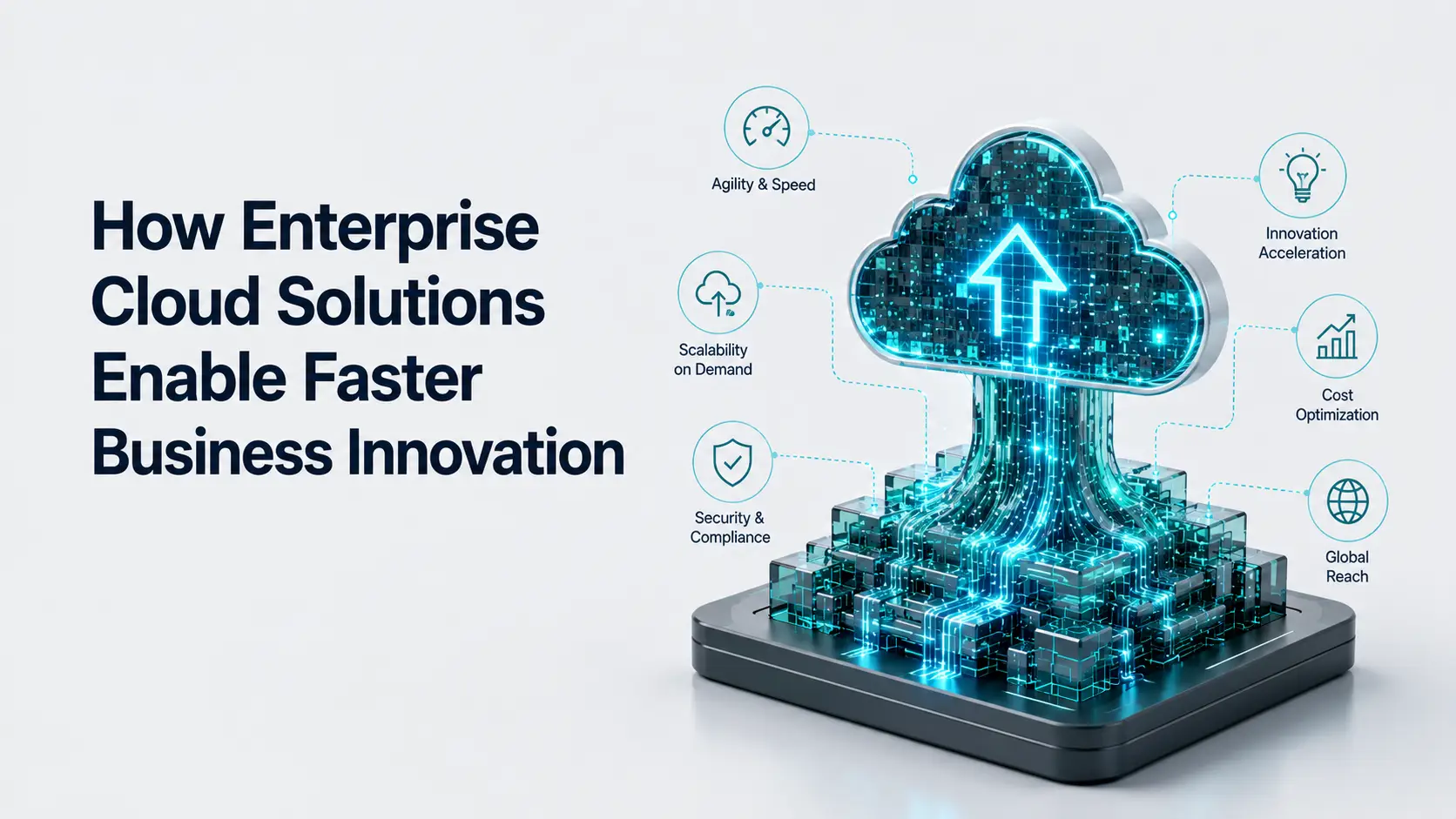
How Enterprise Cloud Solutions Enable Faster Business Innovation
Introduction
Businesses today operate in a highly competitive digital environment where speed and adaptability determine long-term success. Organizations must launch new products, improve customer experiences, and optimize operations faster than ever before.
This growing demand for agility has accelerated the adoption of enterprise cloud solutions across industries. Companies are moving away from traditional infrastructure and embracing cloud technologies to support innovation at scale.
Modern cloud platforms provide flexibility, scalability, and improved collaboration. These advantages help organizations respond quickly to market changes while reducing operational complexity and costs.
Why This Matters
Digital transformation has become a business necessity rather than a future goal. Organizations that leverage cloud technologies can innovate faster and remain competitive in rapidly evolving markets.
Key reasons why cloud adoption matters include:
- Faster deployment of applications and services
- Improved scalability during business growth
- Better collaboration across global teams
- Enhanced security and compliance capabilities
- Reduced infrastructure maintenance costs
Core Concepts / Main Sections
Cloud Infrastructure as the Foundation of Innovation
Modern businesses require flexible technology environments that can adapt to changing demands. Cloud infrastructure services provide the computing power, storage, and networking resources needed to support continuous innovation.
Key Points
- Scalable computing resources on demand
- Reduced capital expenditure on hardware
- Improved system performance and reliability
- Faster deployment of business applications
Example / Use Case
A retail company launching a new eCommerce platform can scale resources instantly during seasonal sales events. This flexibility prevents downtime while maintaining a seamless customer experience.
Accelerating Digital Transformation Through Cloud Adoption
Organizations pursuing digital transformation often face challenges with legacy systems and operational inefficiencies. Cloud transformation services help businesses modernize their technology ecosystems while minimizing disruption.
Key Points
- Modernization of legacy applications
- Improved integration across business systems
- Enhanced customer and employee experiences
- Greater operational efficiency
Example / Use Case
A financial services provider migrating legacy applications to the cloud can improve transaction processing speed and offer better digital experiences for customers without extensive infrastructure investments.
Improving Operational Efficiency with Managed Cloud Services
Managing cloud environments requires expertise, monitoring, and ongoing optimization. Cloud managed services allow organizations to focus on innovation while experienced specialists handle cloud operations.
Key Points
- Continuous performance monitoring
- Proactive security management
- Reduced internal IT workload
- Optimized cloud spending
Example / Use Case
A healthcare organization can rely on managed cloud services to maintain system availability and security. This approach allows internal teams to focus on patient care technologies and service improvements.
Enhancing Collaboration and Productivity
Cloud platforms enable teams to work together efficiently regardless of location. Employees can access applications, data, and resources securely from anywhere.
Key Points
- Real-time collaboration capabilities
- Remote work support
- Centralized access to business data
- Faster decision-making processes
Example / Use Case
A multinational company can enable distributed teams across the USA and UAE to collaborate on projects using cloud-based platforms, reducing delays and improving productivity.
Supporting AI and Emerging Technologies
Cloud environments provide the infrastructure needed to adopt advanced technologies such as artificial intelligence, machine learning, and automation. These innovations help businesses gain valuable insights and improve efficiency.
Key Points
- Access to AI and analytics tools
- Faster data processing capabilities
- Improved business intelligence
- Scalable innovation environments
Example / Use Case
Organizations investing in AI initiatives can leverage cloud platforms to process large datasets efficiently while reducing infrastructure complexity and deployment time.
Key Benefits
- Faster product development cycles
- Increased business agility
- Lower operational costs
- Improved scalability and flexibility
- Enhanced data security and compliance
- Better collaboration across teams
- Simplified IT management
- Faster innovation and experimentation
Common Mistakes
- Migrating applications without a clear strategy
- Ignoring security and compliance requirements
- Underestimating cloud cost management
- Failing to train employees on cloud technologies
- Choosing solutions that do not align with business goals
- Neglecting performance monitoring and optimization
Future Trends
The future of enterprise cloud solutions will be driven by artificial intelligence, automation, and multi-cloud strategies. Businesses will increasingly use cloud platforms to improve decision-making and accelerate innovation initiatives.
Organizations will also adopt industry-specific cloud solutions designed to address unique regulatory and operational requirements. These specialized platforms will help companies achieve greater efficiency while maintaining compliance standards.
As cloud technologies continue to evolve, businesses that invest in cloud transformation services today will be better positioned to adapt to future market demands and technological advancements.
Conclusion
Enterprise cloud solutions have become essential for organizations seeking faster innovation, improved efficiency, and sustainable growth. By leveraging cloud infrastructure services and managed cloud environments, businesses can respond quickly to changing market conditions while reducing operational complexity.
Companies that embrace cloud transformation today will gain a competitive advantage and create stronger foundations for future innovation. To explore cloud-powered digital solutions, visit Matchbest Software and discover how modern technology can accelerate your business growth. You can also explore their comprehensive software and technology services for tailored business solutions.
FAQ Section
1. What are enterprise cloud solutions?
Enterprise cloud solutions are cloud-based technologies and services designed to support business operations, scalability, security, and digital transformation initiatives.
2. How do cloud infrastructure services support innovation?
Cloud infrastructure services provide scalable computing resources that allow organizations to develop, test, and deploy applications faster while reducing infrastructure costs.
3. What are cloud managed services?
Cloud managed services involve third-party experts handling cloud monitoring, security, optimization, and maintenance so businesses can focus on core operations.
4. Why are cloud transformation services important?
Cloud transformation services help organizations modernize legacy systems, improve efficiency, and accelerate digital innovation while minimizing operational disruptions.
5. Can cloud solutions help businesses in the USA and UAE?
Yes. Cloud solutions support global operations, improve collaboration, enhance scalability, and help organizations comply with regional business requirements.
Latest Article
👉 AI Software Development Services: Creating Intelligent Products for the Digital Era
Previous Blogs
Author
Written by: Andrew