

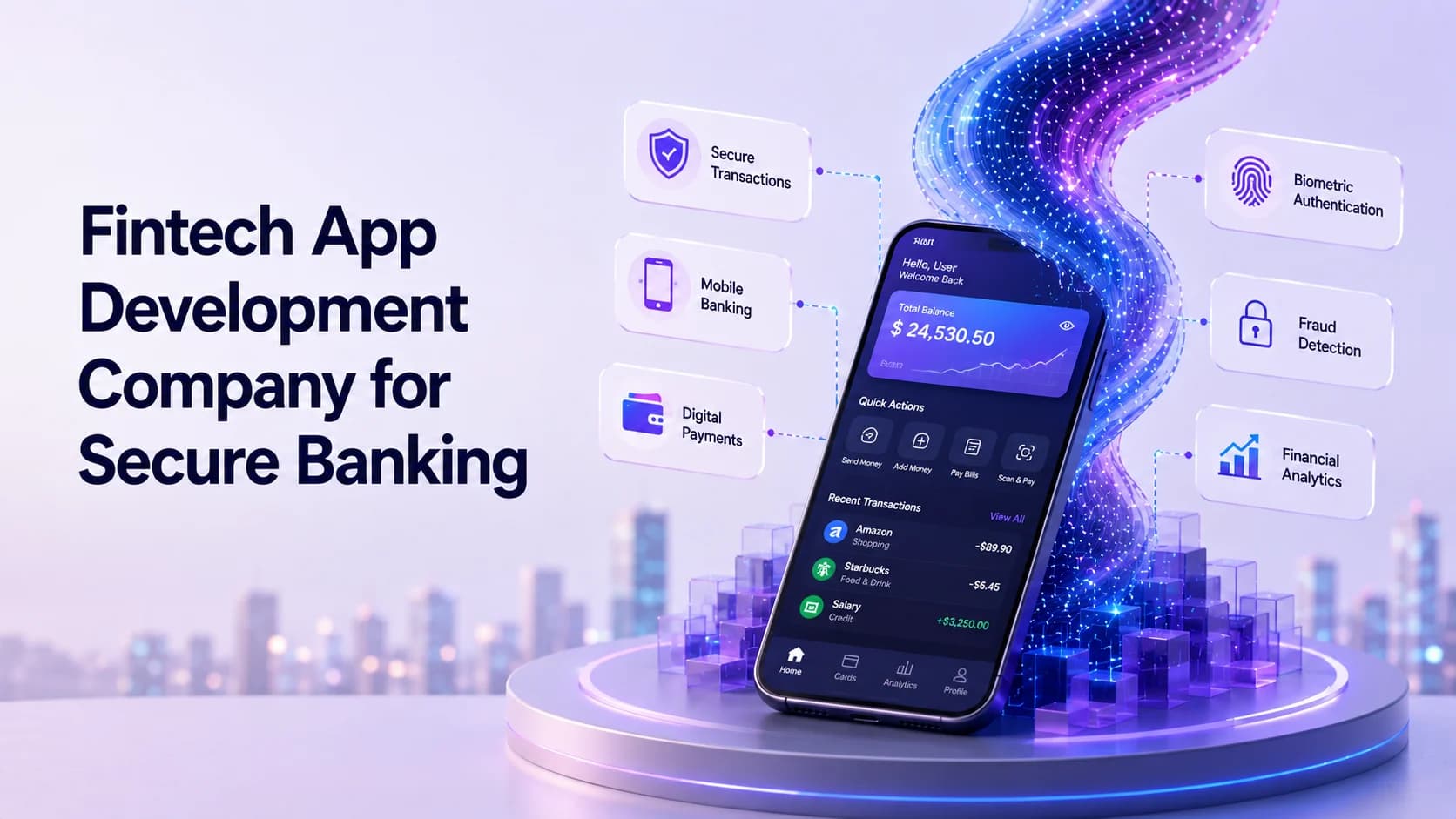
Fintech App Development Company Strategies for Secure Digital Banking
Introduction
Digital banking has transformed how people manage money, make payments, and access financial services. Customers now expect fast, secure, and convenient banking experiences across mobile and web platforms.
As financial transactions continue moving online, security has become a top priority for banks and fintech businesses. A reliable fintech app development company helps organizations build secure platforms that protect user data while delivering seamless digital experiences.
Modern financial applications must comply with regulations, prevent cyber threats, and maintain customer trust. Through secure software development practices, businesses can reduce risks and create scalable digital banking solutions that support long-term growth.
Organizations investing in fintech innovation also benefit from partnering with experienced providers that understand both technology and compliance requirements. This approach enables secure digital transformation while meeting evolving customer expectations.
Why This Matters
Security breaches can damage customer trust, result in financial losses, and create regulatory challenges. Building secure banking applications from the beginning helps businesses protect sensitive information and maintain a competitive advantage.
Key reasons secure digital banking matters include:
- Protecting customer financial and personal data
- Reducing fraud and cybersecurity risks
- Meeting industry compliance requirements
- Improving customer confidence and retention
- Supporting long-term business growth
Core Concepts / Main Sections
Security-First Development Strategy
A successful fintech application starts with security at every development stage. Security cannot be treated as an afterthought because financial platforms handle highly sensitive information daily.
Key Points
- Secure coding standards
- Threat modeling during planning
- Regular vulnerability assessments
- Data encryption implementation
- Continuous security monitoring
Example / Use Case
A digital banking startup integrates security reviews throughout development. This approach identifies vulnerabilities early and reduces remediation costs before deployment.
Strong Authentication and Access Control
User authentication is one of the most critical elements of secure digital banking. Financial applications must verify identities without creating unnecessary friction for customers.
Key Points
- Multi-factor authentication
- Biometric verification
- Role-based access control
- Device recognition systems
- Session management protocols
Example / Use Case
A banking application combines fingerprint authentication with one-time passwords. This layered security approach significantly reduces unauthorized account access attempts.
Secure Mobile Application Architecture
A professional mobile app development company focuses on creating secure application architectures that protect customer data during storage and transmission.
Key Points
- End-to-end encryption
- Secure APIs
- Protected cloud infrastructure
- Data masking techniques
- Secure application containers
Example / Use Case
A mobile banking platform encrypts transaction data before transmission. Even if data is intercepted, unauthorized parties cannot access sensitive information.
Compliance and Regulatory Readiness
Financial applications must comply with industry regulations and regional data protection laws. Compliance strengthens security while reducing legal and operational risks.
Key Points
- GDPR compliance support
- PCI DSS implementation
- Financial data protection policies
- Audit logging systems
- Risk management frameworks
Example / Use Case
A fintech company incorporates automated audit trails into its platform. This simplifies regulatory reporting and improves operational transparency.
Secure API and Third-Party Integration Management
Digital banking platforms often rely on external services for payments, identity verification, and financial data sharing. Secure integrations help maintain system integrity and customer trust.
Key Points
- API authentication mechanisms
- Token-based authorization
- Continuous integration monitoring
- Vendor security assessments
- Secure data exchange standards
Example / Use Case
A fintech provider uses tokenized API access for payment processing. This prevents exposure of sensitive credentials and enhances overall platform security.
Continuous Testing and Risk Assessment
Security testing should continue throughout the application lifecycle. An experienced app development service provider regularly evaluates applications for vulnerabilities and emerging threats.
Key Points
- Penetration testing
- Automated security scanning
- Code reviews
- Infrastructure monitoring
- Incident response planning
Example / Use Case
A digital banking company conducts quarterly penetration tests. Regular assessments help identify weaknesses before attackers can exploit them.
Key Benefits
- Enhanced customer trust and loyalty
- Improved regulatory compliance
- Reduced cybersecurity risks
- Faster incident detection and response
- Better protection of sensitive financial data
- Increased operational efficiency
- Long-term scalability and reliability
Common Mistakes
- Treating security as a final development phase
- Using outdated authentication methods
- Ignoring compliance requirements
- Failing to conduct regular security audits
- Overlooking third-party integration risks
- Storing sensitive data without encryption
- Delaying software updates and patches
Future Trends
The future of digital banking will be shaped by advanced security technologies and intelligent automation. Financial institutions are increasingly adopting AI-powered fraud detection, behavioral analytics, and automated threat monitoring systems.
Blockchain technology, decentralized identity management, and zero-trust security frameworks will continue influencing fintech innovation. Organizations that embrace these advancements can improve security while delivering better customer experiences.
Businesses interested in intelligent technology solutions can also explore our latest article, AI Software Development Services: Creating Intelligent Products for the Digital Era, which discusses how AI is transforming modern software development.
Conclusion
Secure digital banking requires more than advanced features and attractive interfaces. Organizations must prioritize security, compliance, and risk management throughout the development process.
Partnering with an experienced fintech app development company helps businesses build reliable financial applications that protect users and support sustainable growth. Whether launching a new banking platform or modernizing existing systems, investing in secure software development is essential for long-term success.
To learn more about digital transformation and secure technology solutions, visit Matchbest Software (https://www.matchbestsoftware.com/) and explore our services (https://www.matchbestsoftware.com/services).
FAQ Section
1. What does a fintech app development company do?
A fintech app development company designs and develops financial applications such as digital banking platforms, payment solutions, lending systems, and investment applications. These companies also implement security and compliance measures.
2. Why is secure software development important in fintech?
Secure software development helps protect sensitive financial data, reduce cyber threats, and ensure compliance with industry regulations. It also strengthens customer trust and platform reliability.
3. What security features should a banking application include?
A banking application should include encryption, multi-factor authentication, biometric verification, secure APIs, audit logging, and continuous security monitoring.
4. How does a mobile app development company improve banking security?
A mobile app development company implements secure architecture, encrypted communication, authentication systems, and vulnerability testing to protect users and financial transactions.
5. What should businesses consider when choosing an app development service?
Businesses should evaluate industry experience, security expertise, compliance knowledge, technology capabilities, testing processes, and long-term support services before selecting a development partner.
Latest Article
👉 AI Software Development Services: Creating Intelligent Products for the Digital Era
Previous Blogs
Author
Written by: Andrew